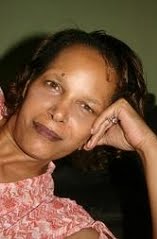
DA Kentner is an award winning author who also enjoys meeting and interviewing authors of many genres.

As author KevaD, my novel "Whistle Pass" won the 2013 EPIC eBook Award for suspense. Previously, in 2012, it won a Rainbow Award in the historical category. "Whistle Pass" is currently out of print, though I'm considering finding a new publisher, or self-publishing the novel. What do you think?

"The Caretaker", a 3,000 word short story, won 'Calliope' magazine's 18th annual short story competition. Click the blue ribbon to view their site and entry rules for this year's short fiction competition.

Friday, October 29, 2010

An Interview with Author, Animator, and Businessman Mark Glamack


If you ever saw "The Jungle Book," "Bed-Knobs and Broomsticks," "All Dogs Go To Heaven," "Spawn," "Yogi Bear," "Tom & Jerry," or countless other animated films, you are familiar with Mark Glamack's work.
If you use Scoreguide to improve your golf marketing strategies, you know Mr. Glamack's work.
And if you served with the First Air Cavalry Division in Viet Nam, the medic beside you, awarded the bronze star, may have been Mark Glamack.

Six time Governor for the Academy of Television Arts and Sciences, presidential appointee to the ATAS Activities Committee, Mr. Glamack holds the principles of celebrating the human spirit as critical to not just the entertainment industry, but to life itself.

A sterling example of his beliefs is his latest multi-award winning novel LITTLUNS, AND THE BOOK OF DARKNESS, "… a story for all ages, depicting everyone's journey through life facing choices for the Light or darkness." And, yes, it includes 63 stunning color illustrations reminding us of Mr. Glamack's ability to "draw" us into his fantastic and unique world.

LITTLUNS is a book designed and written for families, and deserving to be in every home. http://www.littluns.net/

Q) You have described LITTLUNS as a live experience for the reader, as if they are watching a movie. What inspired this amazing book and the concept of creating a visual reading experience?

A) I always look at what is and imagine what can be. The events leading to, and through, the more than three year completion process of “Littluns” is a very long story with more miracles happening to one person (me) than anyone could possibly believe. I was in the process of funding my other projects which range from two motion pictures, a television series, and three inventions; one of which I was awarded a patent as you mentioned above, when an unexpected event changed my life forever. That event and inspiration came in the form of an epiphany asking me, “Write Littluns.”

That was how it all began…

It was from this experience of pure love so powerful that I shelved all of my other six projects that I had created and developed over a decade to spend full-time creating all that has become “Littluns.”

I was guided to create a very different reading experience that readers had never experienced before; a present-tense movie like experience that could only be read as a novel. I also wanted to take animation to a higher level while still having readers use their imaginations to fill in the visuals between the art and established characters. Although everyone is on the same page with characters and locations, their imaginations complete the visual flow in this one-of-a-kind unique reading experience that can’t be found anywhere else.

Q) The Viet Nam draft tore you away from a career at Walt Disney Productions, yet you have remained entrenched in your love of life through animation and family values, and we are so grateful for your perseverance. What first drew you (pun intended) to animation?

A.) I love your pun (DREW) it makes me feel all animated. Picture a bunch of “Littluns’” ears wiggling, and their furry feet jiggling all over the place with all of us shouting “Hootsy-bootsy!” thanking you for your kind words.

When I was seven years old I knew that I wanted to have an animated life (pun intended), although I can be very animated at times. The thought of creating something on a blank sheet of paper from scratch; creating a secondary world than can only come inspired from the imagination, is an art form like no other. Animation has no limitations – if you can think it, you can make it a reality in the hearts and minds of people who want to discover its limitless potentials, and more yet to be discovered.

Q) Your business ventures, patented inventions, entertainment industry obligations, and so much more command your full attention. Why have you now chosen to write and publish LITTLUNS?

A.) Those projects surely did consume all of my time until I walked away from all of that years ago to work full-time on “Littluns.” There was simply no other way but to put everything else on the back burner.

My epiphany experience was like nothing I had ever experienced before. It was from this initial encounter and calling that began it all. The why of it all is in a need for truth to be discovered and where we are all headed from the resulting debilitating influences of evil. Mark Twain wrote: “A lie travels halfway around the world while the truth is still putting on its boots.” “Littluns” tells it the way it is in a non-stop a one-of-a-kind adventure and experience like no novel has ever offered before. You can read about us breaking all the rules at http://www.littlunsblog.com The full impact can only be experienced by going on the journey and adventure with “Littluns.”

A Need For An Alternative.

For some time now, many parents, and others, have voiced their concerns about popular books that send the wrong messages to impressionable, unsuspecting minds. Most of these people talk about their concerns, but few have done anything about it and fewer new options exist that have any appeal to both Christian and secular; young adult and grownup readers. Some popular titles with widespread interest have become more a peer issue than anything of substantive value. On the surface these works seem harmless fun, but they have significant dangers where, as one example, some people would have everyone believe that there is good and bad evil and supporting such popular books from the pits of misdirection and deception create a dangerous vulnerability. Evil becomes victorious when good people do nothing, and even they have fallen prey to reading these not to be trusted books. Hopefully most parents can explain the difference, and hopefully young and old alike will discover the alternative, "Littluns."

An Out of Control World In Chaos.

The negativity and chaos around the world has been building for some time now, and left unattended that bubble will eventually burst. At that point it may be too late. I hope that “Littluns” will contribute a little, or (Litt-L-un), to truth, peace, love, hope, joy, and the heart’s desire in people’s lives. The novel, "Littluns: And the Book of Darkness" triggers EVERY emotion. From life and death, to truth, peace, love, hope, joy and foreboding in drama and comic relief, and the heart's desire, to mystery, terror; to friends and family, to extreme good and evil, to our choice in this life for His Light, or that of darkness. "Littluns" is a fantasy that takes readers into reality, and truth. This may be the first animation-like novel for grown-ups that is also family friendly.

Publishing Beyond What Is To What Can Be.

Imagine an independent publisher offering its readers more than any traditional publisher could or would. We did and published with content and quality second to none. See for yourself at http://www.littlunsblog.com click on the TAB at the top of the page “Breaking All The Rules.” The result is “Littluns,” a family friendly animation-like novel for grown-ups of all ages. Not recommended for anyone under ten years of age because as one reviewer wrote, “…you might want to keep more lights on than just the reading lamp.”

I was forced to self-publish when traditional publishers would not print “Littluns” in color; would NOT print in the USA, and insisted on doing (antiquated) business as usual. Because of their overhead and business model, they would have needed to charge much more for such a book. I created a NOVEL that is affordable and a truly very different reading experience that readers have never experienced before, with quality second to none. Now it’s up to readers to decide for themselves if “Littluns” adds value to their lives.

Q) In your article "At What Cost is FREEDOM Worth Fighting For?" you voice concern people have become too complacent about the Internet and its use. Do you believe the vast pool of virtual information could be dipped into to chip away at our freedoms?

A.) Yes, it could and is in many areas. In fact, much of what is happening on the Internet is more a barrage of incomplete information generated for a self-serving, behind the scenes agenda. If that information is not scrutinized and people continue to be intentionally misinformed by fast talkers, the results will be no one’s fault but our own. In many areas our democracy is presented in the guise of a democracy that is really socialism and this has been building for some time, chipping away at our freedoms one item at a time. With a One World Order looming on the horizon, terrorists could become the catalyst for that to happen virtually overnight. The Internet frenzy will continue until the people put their foot down and say enough is enough. Instead of the safety valve it could be, most of what I’ve seen online are opinions; others are manipulations for self-serving purposes and agendas on a much larger intrusive scale. People continue to be fragmented and disorganized with some good ideas and thoughts going nowhere. The special interests are counting on that to continue. It has also become a useless waste of time that could be otherwise constructively used to implement solutions for the greater good. The bottom line is, don’t take anything for granted in the knowledge that trust needs to be earned.

To be as effective and progressive as it could be, the Internet needs to be organized BY, FOR, and OF the people. Then they must demand with impressive support in numbers that our elected representatives do the will of the people that elected them. Anything less is at our own peril.

Q) What's next for Mark Glamack and LITTLUNS?

A.) In two words, “Everything “Littluns!” Although the novel is complete as it is, if sales and demand dictate, a sequel is possible, but not planned. “Littluns” is complete as it is. There’s been some talk about a television special which would be a new story as a prequel to the book. I have no plans for a motion picture from the novel unless enough people read the book and express an interest in a film being produced. I’m not getting any younger so if that is to happen it would be better sooner than later. The first book took me long hours full-time, culminating in over three years to write and create all the illustrations…When “Littluns” is on autopilot I may just get back to my other projects and let the chips fall as they may. Either way, I wouldn’t trade this blessing and experience for anything.

Friday, October 15, 2010

An Interview with Author Steven Morgan

Steven Morgan's voice, and writing, is fresh, believable, and very much worth taking the time to invest in.
DISCOMBOBULATED, to some, will seem to be Mr. Morgan's debut novel. Far from it.
He's been around the block more than once, honing his craft, developing a following for his work. His stories are raw, just like the streets of Chicago he grew up on.
As Steven's work grows, so will his readership. Fortunately, he won't. The man's 6'5" now.
His love of family – his daughters – includes his favorite book, the Bible.
But don't expect his faith to tone down the edge he implants in every story he writes. That's not real life. And DISCOMBOBULATED doles out the tribulations of life through the main character Ciara Blackwell. Ciara's tale is one of drama, and how sometimes, there is nothing else to look forward to. Still, she asks for nor accepts pity and decides to carve out a life for herself when others turn their backs on her.

Mr. Morgan isn't an author to watch. He's a rolling steam engine you need to jump onboard.
http://www.authorstevenmorgan.blogspot.com/

Q) What inspired you to write DISCOMBOBULATED? And where did Ciara's character come from?

A) What inspired me to write DISCOMBOBULATED was a couple arguing in the parking lot of a grocery store, and the story just took off in my head from there. Ciara was developed from just a combination on women that I know or know of. 

Q) As a child, what books caught your attention and fueled your own desire to write?

A) As a child I didn’t have the desire to write. Writing has always been something that came easy to me. I could come up with an idea and it just would flow. It wasn’t until I got older, that I became interested in writing full time. 

Q) Family is a vital element in all you do. In fact, on occasion you quote family members who have played important roles in your life. Between work and writing, time isn’t a friend. How do you manage to pass your values on to your children?

A) No sleep. I mean, it is something that I can’t get around home. I must spend time with my children and I must write. I usually write late at night because I allow my story to develop in my head and I just release my story at night when the house is quiet, lol. It isn’t easy balancing family and a career, but if you want both of them to work, you will find a way to make it happen.

Q) What's in the works? Can you share what's next from Steven Morgan?

A) Well, I’m currently working on a short story for an anthology and finishing up my next novel (Untitled) , which I hope to release in late spring of 2011. Also, I’m putting the finishing touches to my movie script (Tax Check) a comedy, which I’ll start to film in fall of 2011. I’m always looking for or receiving new projects to venture into. I love writing and I’m working to perfect my craft.

Q) Your road hasn't been easy. At one time, you took your early novels to the streets, selling them hand to hand. What advice do you have for those just getting started?

A) It’s hard work, and don’t expect anyone to put in the work you will. If you’re passionate and serious about becoming the best you can be, the blood, sweat and tears is worth it. Set goals and don’t let anything or anyone stop you.

An Interview with Author John L. Betcher

John Laurence Betcher is one of a new breed of authors. He chose to place his literary career in his own hands. Not something many of us would attempt.


But Mr. Betcher didn't enter into the risks lightly or foolhardily. With a cum laude English degree and Juris Doctorate, Mr. Betcher is well versed and skilled enough to intelligently make his mark in this world previously controlled by agents and publishers.

His latest novel THE 19th ELEMENT recently went into international distribution.

Reviewers consistently praise his writing, including comparisons to Robert Parker's wit, and Vince Flynn's action.

Mr. Betcher's first book, THE LITTLE BLACK BOOK OF VOLLEYBALL COACHING, is a far cry from the action packed adventure series featuring charismatic hero James "Beck" Becker, the third installment of which is expected to be released later this year.
Follow Mr. Betcher at http://www.johnbetcher.com/

Q) Why? Why dive headlong into the turbulent waters of self-publication in both formats of ebooks and hard copies? I should mention here, your novels actually have waiting lists in libraries.

A) First of all, I want to say thanks for inviting me to this interview, Dave. I really appreciate it.
To answer your question -- all publication waters are turbulent these days. I chose the route to publication where I held the most control of the boat.
But enough water analogies . . .

As you mentioned, I published a small book on volleyball coaching strategies in May, 2009. I knew the only way I could get that book published was to self-publish it. Oddly enough, most volleyball coaches don't read much about volleyball. Hmm? (One fellow volleyball author told me his book was a "million seller" -- that is, he had a million in his cellar. Lol.) In any case, my VB book had a minuscule audience from the word go, and I knew it. No traditional publisher would have been interested.

So when it came to publishing my suspense/thriller novels this spring and summer, I already had a good chunk of self-publishing experience from the first book under my belt. I knew how to design and layout a book, list it on Amazon and convert it into Kindle format. Those things remained the same from 2009 to 2010. But it was the improvement in Print On Demand (POD) quality and pricing that really made self-publishing an easy decision for me with my current books. Now instead of warehousing and shipping books all over the place, I can accomplish printing and delivery seamlessly through my POD printer, CreateSpace. I never lay eyes on most books I sell.

There have been other changes in the publishing world since 2009 as well. The industry now generates more self-published titles each year than traditionally-published ones. Amazon is selling more eBooks on Kindle than they are of the paper variety. And the public has rushed to adopt eBook readers in general -- Kindle, Nook, eReader and others.

At the same time, traditional publishers are changing how they do business. It's no longer possible for an author to approach a mainstream publisher directly. You have to go through a literary agent.

Agents aren't used to being the gatekeepers of the industry and are unprepared to deal with the hundreds of Query Letters they received via email each day. Who wouldn't be? As a result, it has become more difficult to obtain a literary agent to represent your work. And if you are fortunate enough to snag one, they face a contracting traditional publishing business to whom your book can be sold.

From my perspective, traditional publishing is looking like a less and less attractive avenue. Even if you do get your book published via the traditional route, publishers are now requiring new authors to do almost all of their own marketing and promotion . . . and on the author's own dime, as well.

When it came time for me to make my publishing decision, I knew I could write a book. And I could publish a book. And I was going to have to market the book anyway . . . why not retain creative and strategic control and higher royalties?

Returning to our water analogy -- that, in short, is how I came to take the plunge into the expanding ocean of self-publishing.

Q) What took you from volleyball to action/adventure stories? Where did that interest come from?

A) Just before I penned the volleyball book, Coaching Volleyball Magazine -- a national volleyball coaching publication -- had featured my picture and a recent volleyball article on their cover. It was the April/May, 2009 issue. I like to joke that the USA Olympic Gold-Medal-Winning Men's Volleyball Coach Hugh McCutcheon had to wait until June to get his picture on the same magazine's cover. That statement is true. But it certainly has nothing to do with my story being more important than his. It's just a fun tidbit to tell.

For about eight years before publication of that volleyball article, I had been involved with youth volleyball in my home town. Writing volleyball articles for Coaching Volleyball -- there were three articles in all -- was a natural offshoot of the experiences I was seeing play out before me in the volleyball coaching world. I coached my last year in 2008 - 2009. That spring, my youngest daughter graduated high school.

With her advancement beyond youth sports . . . and a concurrent decrease in my involvement therein . . . I had spare time on my hands.

One night my wife, who loves to read mysteries and thrillers, was lamenting that she was running out of good books to read. She suggested to me that I spend some of my new-found leisure on trying to fix that situation.

I had a few ideas. I was intrigued by a new challenge and all the learning that would accompany it. So I dove in. (Sorry about the water again.) I found I enjoyed both the writing and the learning, and haven't looked back since.

Q) No doubt you've learned, and probably are still learning marketing strategies. Did the pitfalls of marketing come as a surprise, or had you conducted sufficient research early on in order to avoid many of the mistakes novice self-pubbed authors seem to make?

A) Your question poses a false dichotomy. (eg. Did you go to Duluth or by bus?) The pitfalls and challenges of marketing were known to me. And you are correct that I had to do a lot of learning as well. But that doesn't mean I have avoided the mistakes of a novice self-pubber. By and large, I am pleased with my marketing strategy and execution to date. But it is very early in a very long race. There are also a few things I probably wouldn't do again if I had them to do over.

I wouldn't enter so many contests. That gets pretty expensive. And my research has shown that winning recognition in most of those competitions does little for actual book sales. Sure, it makes you feel good. But I wouldn't put my marketing money there again.

And I would certainly develop my web presence and social networking more completely before I released my book. I'm just now getting to where I want to be on Twitter, with 2,000 followers. And my blog at Self-Publishing Central is still in its early stages. My first version of an author website was also a DIY job. I didn't get that fixed until June. I'm satisfied with it right now -- at least at my current scale of operations. I may upgrade again if things really take off.

So I was prepared. And I learned. And I still made mistakes. And I continue learning. If anyone claims to be an expert in the book publishing/marketing biz right now, they're being optimistic about their clairvoyance. The industry is still in flux. Only time will tell which strategies will truly work. Right now, I advise authors to employ as many marketing approaches as possible -- and spending as little money on them as you can manage.

Q) What books or stories first caught your attention and gave you pause to believe you would like to write?

A) I am a huge fan of the late Robert B. Parker . . . particularly his Spenser Detective Series. If anyone is responsible for influencing my writing style, and for giving me hope that I might be able to write fiction, it would be Mr. Parker. His taut prose, enjoyable characters, keen wit, and gift for keeping the plot moving along have inspired me more than I can say.

Q) For those who think they would like to write a book, what advice can you offer?

A) If you would like to write a book . . . give it a try. Expect it to take a very long time.
Sit down at a comfortable location with your computer and begin wherever seems best. Outlining? Plotting? Or just start the story. Then keep writing until you have reached an end. Write whether you feel inspired or not -- you can always fix it later.

When your first draft is done, know that you are just beginning to write that book. Keep working with it until every part of it is the best it can be. No one writes a good book -- they re-write one.

Don't worry about how to publish your book until you've got a finished book in hand. You'll have enough on your plate with just writing until that first book is done.

And once the book is done . . . hey, you've written a book. And don't let anybody take that away from you. If others criticize, you can always ask to see their books. Or you can do as I do and simply say, "I keep trying to get better all the time."

Friday, October 8, 2010

An Interview with Author and Publisher Joan De La Haye


Joan De La Haye is the daughter of diplomats, educated partially in Vienna, fluent in four languages, qualified in hypnotherapy, holder of a degree in Art and Creative design, a devout lover of animals and ecology, co-owner of Rebel ePublishers who tackles Marketing and Operations, this golden-haired woman is also an outstanding, veteran author of… horror. And not your everyday chew-your-fingernails-to-the-elbow horror.
Joan, amongst other works, wrote the incomparable SHADOWS, an intense foray into insanity that leaves the reader wondering, questioning their own grip on reality. If you've ever wondered 'is it me, or is the world crazy?' – SHADOWS will leave you with a most disturbing answer.
Her next novel REQUIEM IN E SHARP (due out early 2011), a battle between a haunted cop and killer in Pretoria, South Africa, promises its own serving of madness and mayhem.
http://www.rebelepublishers.com/ http://joandelahaye.wordpress.com/

Q) Your mother and grandmother played important roles in your life. I really can't imagine your bedtime stories were tales of the occult and paranormal. What books did catch your attention as a child, and what sparked your interest to immerse yourself in the horror genre?

A) My Grandmother used to read the tales of King Arthur and his knights to me at bedtime and then as I got older I discovered Alexander Dumas and The Three Musketeers. My Father was a huge Dennis Wheatly fan, so I grew up with his books as an introduction to horror, but I must admit I never thought of the Wheatly books as being Horror novels. It was only in my twenties that I discovered Stephen King's Misery and was well and truly hooked on horror. I never looked back.

Q) Why start your own publishing company now when the literary world hasn't settled yet from the explosion of ebooks? Some may view this as risky, but I suspect you and your partners didn't enter into this lightly. I have to add; the quality of books and authors Rebel handles is most impressive.

A) Thanks David! We're very picky about the books that we publish and we work with the Author to produce the best possible quality of book.
When Caroline and I had both finished writing our books, we took a look around at the publishing industry and the problems that other publishers were having and decided to take our literary future into our own hands. We were also lucky enough to have Jayne Southern, a wonderful editor, join us on our venture. We started with ebooks and learnt a lot about publishing, we continue to learn something about this complicated industry every day. After a year of cutting our teeth on ebooks we decided to broaden our horizons and branched out into Print on Demand which really opened things up for us. Our books are now available all over the world in both ebook and paperback format. The decision to start our own Publishing company was a risky one, but it was definitely worth it.

Q) A question to satisfy my own curiosity. No doubt, once friends learned you turned to publishing, you had to learn the word 'no.' How did it feel to have to break the news their work wasn't up to Rebel's high standards?

A) Luckily I haven't really had to worry about it. My friends are all incredibly talented and most have contracts with big publishers, so in order for them to send me their manuscripts I'm the one who has to beg and plead. I also think they're waiting to see how Rebel does in the future.

Q) Even though you are besieged with work, you take time to readily communicate with fans you endearingly call "Freaky Darlings." That's an indicator of someone who truly enjoys people. How do you recharge your energy when you need a break?

A) I've never really thought of myself as a workaholic and if you love what you're doing it doesn't matter how busy you are, it doesn't seem like work. I love hearing from fans and aspiring Authors. It always makes me feel very special when someone goes out of their way to tell me how much they loved my book. It makes all the hard work worthwhile. But I will admit that in the middle of the day I sneak away from my laptop and veg out in front of the TV with my lunch to watch Supernatural or Castle and then it's back to work.

Q) How do you juggle publishing and writing without dulling the edge of either one?

A) I try and divide my day up. In the morning I focus on publishing and organising publicity for my Authors. Once I've handled all the emails and queries and whatever else has cropped up I then try and focus on my writing. After I've worked on a chapter or two I go back to publishing and deal with whatever has cropped up while I was working on the book. It seems to be working.

Q) For those who have a story to tell, but have yet to write it, what advice can you offer?

A) Just do it. Get writing! A book doesn't write itself, you have to open up that blank word document and write that first sentence and that first paragraph and keep at it until you have that first finished draft. I would also suggest going on a writing course. The people you meet and the things you learn on a good writing course is invaluable. Also join a writing group, whether it's in person or on-line. You're going to need the support of other writers, they're the only ones who truly understand what you're going through when you're having a problem with a plot twist or a character that has cropped up out of nowhere. And read Stephen King's On Writing. It's a book I read over and over again.

Tuesday, September 21, 2010

An Interview with Author Winona Rasheed

Winona Rasheed writes to inspire. And, to that end, she succeeds.
Ms Rasheed writes children's books. From A NEW HOME FOR HER CUBS, the tale of a lioness searching for a peaceful and safe home to raise her family, to the deceptively impressive BROKEN VOICES, she artistically conveys a message of hope and love for children of all ages and, yes, abilities and disabilities.

BROKEN VOICES is a celebration of differences and acceptance. Written for children and young adults, this story deserves to be read by every one of us, regardless of age. It is a story of courage and how the only chains binding us are in our minds, and once we slip those chains, we become victorious.

Though we may believe she is a relative newcomer to novels, Ms Rasheed has been writing what we read for longer than one would expect. She has been a ghostwriter and editor, as well as author of a number of articles for Authorme, Demand Studios and Quality Gal.

Ms Rasheed's voice is powerful, yet with a gentleness that snuggles you next to your child in bed, sharing her marvelous tales and creating lifelong memories and smiles.
http://www.winonarasheed.com/index.html

Q) What were the first books that captured your imagination and gave you the thought you might like to write?

A) As a child, some of the first books that I loved were the old time favorites like Sleeping Beauty, Cinderella, The Cat in the Hat, Tom Sawyer and Chicken Little come to mind. I loved stories that made you giggle and those with a happy ending. At thirteen, it seemed to me that reading and writing went together like peanut butter and jelly; you couldn’t have one without the other. Though I always loved reading, it wasn’t until I wrote a short story for extra credit for English class that got me interested in writing. When I saw that big fat A plus on my work, I was hooked. The teacher liked my story and thought I did an excellent job. So, it wasn’t necessarily the books that inspired me to write, it was the first A I received in creating and writing a story. It was like that one particular teacher was telling me that I had talent and she was impressed. Perhaps now that I think about it, she was grading me on my creativity and story idea, because I hadn’t even begun to learn the proper essentials of story writing. That did not come until much later. But, that first A is what lit the fire in me to write. It gave me confidence in myself at the age of thirteen.

Q) Here comes the obvious question. Why children's books? And, given your skill at creating and telling such masterful stories, have you considered other genres?

A) I didn’t always write children stories. That did not occur until after I took a course in writing for children and teens from the Institute of Children’s Literature. Before that, my short stories that I wrote for fun or as a hobby consisted of light romantic situations that were geared toward young adults in relationships. That particular writing venue came from me reading lots of Harlequin Romance books. In my stories that never took off, because they have been long forgotten about, my characters were African American. I love writing short stories for children, because for me they are easier to create and less time consuming. However, I could consider writing in other genres if a particular idea took me by storm the way writing for children has. That has not happened in this stage of my life, not like it did when I was a teen. With the children genre, I feel that I have found my nitch and I am quite comfortable in it. Before, writing was a hobby, but today it is my life.

Q) I want to point out, your love and concern for children is a dominant part of your life. Your startling article "The Diamonds of Africa" includes these lines: "…do you really need to walk in the shoes of the poor, the destitute, the young and helpless before we give a helping hand? Where is the compassion for the human race and its children?"
Usually, when someone is filled with such passion and compassion, someone instrumental in their life planted the seed. For you, who was that person?

A) I really can’t name a particular person who I can say was instrumental in planting that seed of compassion, except for my mother who was a very compassionate and caring person. However, I can remember as teen seeing commercials on TV about the poor and destitute children in other countries. Seeing kids with torn clothes and not enough food to eat, and seeing insects flying around their faces broke my heart. Even then I knew it should not be that way. I was wishing that I could adopt all of them, bringing them home to live with me. However, I was a humanitarian at heart, because little ole me couldn’t do anything in reality to make a difference. The only thing I could do was write about it, but that contribution didn’t occur until much later in my life, when I jotted down my point of view, informing the world that children are still suffering, children too destitute to even have dreams of a better tomorrow. On my website blog, I have other articles on this topic.

Q) You just attended your first book signing in Washington, D.C. How did it feel meeting some of the folks who buy and read your work?

A) Although I am an author with six published books; my latest book “Broken Voices,” which is published by New Line Press, really opened doors for me as an author. I have never attended a book signing, or been interviewed before with the rest of my books. I was in 7th Heaven when invitations started coming in. Actually, I felt like a star at the Academy Awards. It was an awesome feeling standing there shows casing and talking about all of my books at the library event. It took me two weeks to prepare, getting all of my supplies in order so that I could set up my table. It was very exciting. At last, I was making my debut as an author and the library event was my red carpet. At the end of the event, I walked away feeling accomplished, motivated and inventive. I was a bona fide author. To all of those who write, I say hold on to your dreams and don’t let go of them.

Q) The concept of books is evolving. Most of the time, when discussing the advent of Ebooks, the talk overlooks the feel of your child or grandchild on your lap sharing a book together. What is your take on the future of printed books?

A) Even in this modern world of technology, and staying up with the changing times and trends, I must admit that I am a bit old fashion or old school as one would say. There is nothing like having a child sit on your lap listening to a story being read while they turn the pages, or reading a story such as, “The Monster at the End of the Book” to a classroom full of preschoolers, and watching their faces as they anticipate the teacher turning the page. Regardless of our changing times, I believe old fashion paper bound books will never be obsolete. I don’t see anything wrong with e-books; it gives authors and readers options. For myself, I am pleased that all of my books can be bought as either an e-book or a print copy, because it gives potential buyers choices. However, I don’t think that libraries or book stores will ever do away with paper bound books. There would be too many empty shelving units and a lot of Kindle files to upload or download. Where and how would they store all these titles? How would customers browse before they buy? How would you go about checking out an e-book at the library, would you still need a library card? Even in the 21st century, there are some things that just shouldn’t be changed.

Q) What advice or encouragement can you offer those who have a story to tell, but have yet to put pen to paper?

A) My advice to those who have something to say, but has yet to write it all down, I say “get to writing!” A lot of people fear writing because of all of its mechanics. But, the most important factor of writing is getting started. You don’t have to worry about making it perfect the first time. What is important is the fact that you must write your thoughts and ideas down, even though they may be jumbled up and confusing. This is your first draft. It may take 3 and 4 drafts before you have everything down the way you want it to be. You should not be under any pressure because you aren’t working under a deadline. If there are errors, don’t be concern, for you can always go back and correct them later once you have a draft in place. Just remember, all writers, new and old are always tweaking that manuscript before it is sent to a publisher. But, the main thing is to get started on the writing process. A writer turned author has a lot to look forward to, even if the road to success is a difficult one. But, believe me when I say the journey is well worth all your efforts when you go from being a writer to becoming an author. It all begins with that first draft. You have to write it. You have to begin the writing process.

An Interview with Author and Astronomer Hilton Ratcliffe

 South African astrophysicist Hilton Ratcliffe is not the conventional anything. If a reader is expecting to find confusing jargon in his acclaimed novel "The Virtue of Heresy - Confessions of a Dissident Astronomer," they will be sorely disappointed. If the reader expects theories – guesswork - again, disappointment is sure to follow. However, if the reader is seeking pure fact about the universe in which we live based upon Hilton's belief "Mathematics does not exist in nature. It is contained absolutely and entirely in the human mind—which of course, by my definition, is an unnatural place!" the reader is in for a delightful and educational read.
And Mr. Ratcliffe is hardly alone in this 'groundbreaking' information.

While Mr. Ratcliffe expected theoretical and philosophical stoning, what he found was an ally in none other than legendary British astronomer Sir Patrick Moore. Together they coauthored "The Static Universe" which deals a devastating blow to the notion of universal expansion.

What drew my layman's attention to Mr. Ratcliffe was this simple and beautiful summation: "We don’t need vast banks of supercomputers linked to radio telescopes in an array reading 100 billion deep sky signals a second in order to find intelligence greater than our own.
Just look carefully at the blossom of an orchid; the antennae of a moth; the structure of a crystal; the surface of the Sun; the movement of a cat; and the rings of Saturn."
http://www.hiltonratcliffe.com/index.htm

Q) To ask what filled you with the passion to study beyond man's theoretical teachings would, no doubt, be a book in and of itself. So, allow me to ask, why go out on a philosophical limb and publish your findings? It took a lot of courage.

A) No, it was unavoidable. I was a pressure cooker and publication was a relief valve. Courage? Not much. I am financially independent, so my personal comfort is not threatened by the pedagogues who rule the practice of physics, and especially of cosmology. I have colleagues who have been barred from observatories, had publication refused, had research funding withdrawn, lost jobs, even been chased from their country of birth, all because they insisted on publicly announcing what they had seen in the heavens, and which did not fit the preferred model. They have so much courage it makes my eyes water. They almost literally put their lives on the line. They are the Galileos of our time.

Q) You wrote this: "I want to put the physical back into physics. We will certainly explain far less of the perceived Universe if we do as I suggest, but we will explain it in a fundamentally better way." That statement can be perceived as reaching right into every science classroom in our educational systems. What do you believe is necessary to return education to teaching fact over theory? Theory, after all, is far more entertaining.

A) Theory would be more interesting if it were logical and comprehensible. In the case of mathematical theory, it is neither. There have been no new fundamental discoveries in physics for over half a century. Physics is dying, being suffocated by meta-mathematics, and physics departments at major universities with grand histories in physical science are closing down for lack of interest. It is a crisis in my view. My belief therefore is that physics should be taught with less emphasis on maths and more on empiricism. Let's get back to when physics worked in the real world, and formed the backbone of applied sciences. Only then will we progress as we should.

Q) An opponent of the "Big Bang", can you briefly explain why you believe this theory is held onto so strongly?

A) Professor Don Scott told me once, "The problems with cosmology and astrophysics in the modern era are not scientific so much as sociological." Big Bang Theory is a faith-based system. People believe it because they want to believe it, not because they have been convinced by the supporting data. When Einstein was ready to write down what was to become his General Theory of Relativity (GRT), he found that the mathematics required by such a concept were quite beyond him. He consequently engaged the services of his friend, mathematics professor Marcel Grossman, to construct the mathematical formalism. Grossman felt for reasons we can only speculate about that the best way to achieve this was to use a new and little understood arcane mathematical language called Differential Geometry. It is estimated that when GRT was published in 1915, only about a dozen specialist meta-mathematicians in the whole world could decipher the maths. Yet before long, Einstein was the focus of intense international adulation by millions of people. Since only a minute fraction of those fans could understand the theory, there had to be another reason for the adulation. It was not the workings or the plausibility of the theory that impressed people so much that they created from it an enduring dogma. It was a psycho-social imperative that has characterised all widely defended dogma, including Big Bang Theory of course, which is the offspring of GRT. Once the new dogma has become entrenched within the educational system, it is done and dusted. Universities (mostly inadvertantly) become in effect propaganda machines, and produce scientist who quite frankly cannot practice or teach physics any other way. If, as in the case of GRT and later with Big Bang Theory and Black Hole theory, the protagonists have seductive charisma (which Einstein, Gamow, and Hawking, respectively, had in abundance) then the theory, though not the least bit understood, becomes the darling of the media. GRT and Big Bang Theory are sacrosanct, and it's most certainly not because they make any sense. In fact, they have become the measure by which we sanctify nonsense.

Q) You adhere to the classical approach to space science. Everything you do is based upon observation, not esoteric theory. I suspect someone in your life helped to provide such a 'feet on the ground' attitude. Who was it?

A) Initially, my father. He was a nuts-and-bolts physicist. His motto in life was "No hocus-pocus." There is a beauty intrinsic to Newtonian Mechanics that emulates the beauty of nature in the world around us, and even more compelling is the fact that it works so well. The whole of Newton's monumental "Principia" can be understood and put into practice with just high school mathematics. My father explained nature to me in Newtonian terms, and it stuck.

Q) May we look forward to another book from you in the near future?

A) Yes, I have started a third book, entitled "Stephen Hawking Smoked My Socks!" Watch this space.

An Interview with Author and Health Advocate Sue Visser

Sue Visser is a health researcher, product developer, and passionately devoted to encouraging people to help themselves to a healthy life.


Her book, "Illustrated Guide to Healthy Happy Eating - For All Blood Types," though currently out of print (Limited copies of the second edition are still available from her for less than 1/4 of that price including postage) sells used on Amazon.com for a whopping $195.00. How's that for a testament to supply and demand? More importantly, that fact should serve to draw notice this lady knows what she's talking about.

Sue's enthusiasm for blood type eating has resulted in a wealth of practical information. She shares this freely with everyone by means of magazines, newspapers, radio broadcasts and workshops. Sue also shows us how to find our own cures in the kitchen for common ailments like coughs and colds, hormonal upsets, digestive disorders, arthritis or aches and pains.

But Sue doesn't stop there. Residing in Cape Town, South Africa, with her husband Jim, Sue treks to remote African villages (and many other parts of the world) where she educates people on nature's foods available around them, and how to grow food sources such as Artemesia, a plant research has shown combats malaria.

Sue can be contacted through her web site http://www.naturefresh.co.za/

Q) The obvious question should be asked first, I suppose. When did you become interested in improving your and others health, and what was the impetus which drove that interest to a passion you have devoted your life to?

Sue) When your baby son nearly dies from a series of respiratory collapses and antibiotics make it worse, you wake up. Homeopathy saved the day, with a few white pills that matched the symptoms. Anton is now a towering slab of muscle in his 30's. He eats for blood type A and so does his father. When they don't, they complain of fatigue and have learnt that they are different from O type Mom and daughter Vivienne. (Thank you Peter D'Adamo for that!)

The black Zulu people called me "Sangoma" as a child. They saw something in me that they recognized as an innate healer. We made porcelain clowns for a living for many years and I loved working with minerals and formulating. After my husband Jim became ill from a bacterial infection and the stress of feeding the family from hand to mouth took its toll, he started to get paralysis attacks and painful joints. A relative who followed the Adelle Davis protocol insisted he needed calcium. He recovered with a concoction of calcium lactate and cider vinegar. Yuk! 14 years ago there were no good calcium supplements on the market, so after that our pharmaceutically pure calcium and magnesium powders used for porcelain were put to good use. In no time I had formulated an ideal supplement and a few years later it showed up in a survey as being the best formulation at the lowest price per dose. I bought and read all the books I could find on homeopathy, reflexology, iridology and nutrition. I became a pain in the ass "authority" on how to fix body parts! It paid off, with a healthy family and now we all walk our talk. I have been accused of being too enthusiastic, too passionate by those who cannot keep up with me.

Q) Sorry, Sue, I have to ask this to satisfy my own curiosity. With private sellers receiving $195.00 for your book, how do you feel about that, since you receive no part of that money which could be used to aid your research?

Sue) Good luck to them! That is nothing compared to doctors who are paid to "practice" on people and then I am asked to sort out the mess. I have devoted my life to research and have a good working knowledge of medical matters. I test out theories, trial formulations, claims and cures constantly even at my own expense to get to grips with how a human being ticks. To me it's not about making money from sick people and causing them to get sicker. It's not about claiming your line of products to be the cure-all. Sooner or later the vendors of "snake oil" trip over their own shoelaces. People feel so bad because they eat so bad. I tried to change that, so at whatever price my book is sold, it provides a few keys to good health. Every page is illustrated with full colour photographs I took myself. I did the graphics, typesetting and the layout. It's a piece of me. Priceless at any price.

Q) In today's world seemingly filled with the philosophy of 'get what you can,' you don't. On your web site you freely share articles on how to improve our lives. The topics range from a deworming recipe to how food can make us feel sexy. Why do you offer so much of your research for free?

Sue) I take no anxious thought for my life: what I should eat or what I wear. We are provided for - however, where ever. I take more anxious thought about gluten, trans-fatty acids and too much sugar! Being a community worker, I have never received direct payment. My life is about love and service. Too good to be true? That is the policy statement for our company called Nature Fresh that we registered in 1997: love and service. The cheapie Chinese porcelain dolls destroyed our livliehood and by then I was already making fluoride free toothpaste and campaigning against killer chemicals in our water supply. When Christ healed the sick did he first ask for credit card details? Do you receive a bill in the post after your prayers have been answered?

Q) Another curious question. What's it like working with small African villages, knowing when you leave, you leave the residents with the ability to increase their chances for survival.

Sue) You don't. Most people are stubborn, lazy, unappreciative and more interested in free hospital medicines. They spend their pennies on white bread and bottles of Coke because they try to copy us. Every 30 seconds somebody dies of Malaria somewhere in the world. But many die every second in ignorance of their Godliness. They kill each other too, just because of a difference of opinion. Can medicinal plants change that? Bill Gates set the stage by trying to provide artemenisin, a synthetic version of the plant extract to help the situation. The mosquitoes became resistant to it. But not to the plant itself. We also use olive leaves. Both these herbs deal with microbes and parasites. I put together a remedy and included them with other anti-microbials. Over the years I have given black people the parasite remedy if they don't feel well. When they come back and demand more, I get curious. I was told that they had been HIV positive, but are now HIV negative. Yes, there is a big parasite problem!

Q) Will we soon see another book by Sue Visser?

Sue) Sure, help yourself, its on my website for free. I did a 16 page book called: "Yummy Yummy" for children. Mom can show her kiddies about fruit and vegetables with the furry characters that really love their broccoli and spinach. You can download the PDF's or read it on the computer screen. I would really appreciate some feedback. The idea of another book never leaves my mind. The camera is always clicking. Exciting cuisine that suits all blood types and is gluten free, helps to fight cancer and boost the immune system rolls out constantly. Articles and recipe pages as well as helpful protocols for just about any ailment are available as zip folders on the website. When it comes to publishing another book and financing it or schlepping around for printing deal? It was a hard time staying out of jail the first time, so probably not in this lifetime.

Friday, September 3, 2010

An Interview with Bestselling Author Catherine Burr

Catherine Burr. Where does one begin to describe her?


Humorist and romance author, businesswoman, entrepreneur, publisher, graphic designer, and blessed with eyes so blue you swear you can see a Caribbean morning in them, I suspect only scratches the surface.

Her work has garnered her the Outstanding Author Award, inclusion in an Author’s Hall of Fame, Blogger’s Choice Award nominee, listed as a Foremost Domestic Humorist in North America, and MOTHERHOOD IS NOT FOR WIMPS, a book she co-wrote with her sister Beverly Rose Hopper, has spawned a motherhood support group of the same name.

Ms Burr holds the distinction of being a best-selling author on both Amazon.com and Mobipocket.com as well as the Best of Silicon Valley Books. She has made repeated appearances on TV and radio, and her writing has been excerpted in national and international magazines and newspapers. Apparently success can be measured by how often others want to ‘borrow’ what you have written.

But what I think stands out about Ms Burr is her ability to relate to not just a woman’s frustrations and turn them into a smile, but to know, understand, and celebrate the inner desires of today’s working woman and homemaker. Her books connect individually with each reader, leaving them satisfied and accepting it is okay to be whoever you are and joyously live life. http://www.catherineburr.com/

Q) What books or stories captivated you as a child and first put the thought in your mind you would like to write? What kind of stories did you initially pen?

A) I initially penned parenting humor because as a mom I think it’s important to see the humor in raising children. Moms like to talk about our kids and love to relay stories of our kids from diapers to weddings. As my own children grew, I found myself writing about relationships, marriage, and the suspense of life. I was able to seek out other genres and explore areas beyond motherhood. Growing up, I loved series books, anything that had the same characters from one story to the next. I liked (still do) when you fall in love with characters and you can follow them through from one journey to the next.

Q) Finding conveyable humor within the daily lives of mothers isn’t always easy. Many have tried and failed. A small few have succeeded. You have risen to the top. Where does your ability to smile at the curves in life come from? Obviously, someone very special to you implanted at least a part of that in you and your sister. Who was it?

A) I was blessed with a mother-in-law who gave me some advice I always remembered. She taught me to see the humor in raising children. Believe me, when you are head over heels with laundry, bills, soccer cleats, dinner, it’s not always easy to do that, but humor helps the day go by a little easier when raising kids.

Q) Ironically, being a successful author about families requires your being absent from your own family. How do you cope during those separations?

A) I think authors travel less and less with the new generation of cyber tours, blog tours, and with the lessening of brick and mortar book shops, authors are staying closer to home so the times separated from one’s family is not what it used to be for some writers. I think for authors like anyone that has to encounter traveling and maintaining family life, it’s good to have a support system (and to use an internet phone like Skype!)

Q) DESIRES AND DECEPTIONS, THE MISTRESS FILES, and the Silicon Valley novels are wonderfully woven tales of intrigue, suspense, and love. But ORCHIDS TO DIE FOR broke a new barrier for you. In it you created a female sleuth out to catch a spy. How did that story come about?

A) I created the Catherine Harris character, a female version of James Bond, because I had an idea in my head for this female sleuth to be chasing spies and finding romance along the way. Harris was a romance writer who got involved with spies and generally I was able to explore romantic suspense areas that I previously had not written about. I stayed true to my female characters, spy chaser or not, to be romantic and always with a sense of humor. Strong female characters with a sense of humor is a style that is indicative to my writing.

Q) The publishing world of today is vastly different then the one of even twenty years ago. What advice can offer those who believe they have a story to tell?

A) The publishing world today is so different than 20 years ago, and the options for publishing even in the last couple years has changed dramatically, but the constant is still the love of reading and the love of books, whether digital or print. Aspiring writers should look at all of their options, find great editorial support, network with fellow writers and authors, and go full steam ahead with their goal to be published. While on the road to publication, people will get discouraged but it is the people who do not give up who will succeed.

An Interview with Author Dr. Michael J. Deeb

Education and fiction. Two polar opposites? Not if you’re author, historian, scholar, educator, and artist, Michael J. Deeb.

Dr. Deeb writes tales of the American Civil War. What stands out about his works is his attention to the smallest detail, the minutia. His research in preparing to write a story is impeccably on point and, in my opinion, his novels could easily serve as textbooks for other authors wanting to write about events of that era in our nation’s history.

Yet, research alone does not make for a stirring and moving story. The characters and plot must draw the reader in and sweep them along through the turbulence and emotions surrounding the circumstances the main character finds him or herself in.

Dr. Deeb has the ability to do just that - to captivate the reader in the period, the character, as well as the events, and the consistent reviews his work receives only serve to verify it.

His attention to detail and skillful portrayal of life have been recognized in that he now also writes book reviews for The Civil War News and New York Journal of Books.

You can find Dr. Deeb, his novels, and a few of his paintings at http://www.civilwarnovels.com/.

Q) What were the books or stories that captured your imagination as a child and put the thought in your mind you would like to write?

A) As a pre teen, I used to take the bus in downtown Grand Rapids after school and peruse the 'history book' stacks at the Grand Rapids Public Library while I was waiting for the YMCA to open for swimming. I can't recall any specific title or author. More recently, however, I have enjoyed the works of John Jakes, Bernard Cornwall, and Harold Coyle among others. I would say that Jakes has had the greatest influence on my writing style.

Q) DUTY AND HONOR, DUTY ACCOMPLISHED, and HONOR RESTORED is the trilogy surrounding a youth slapped into manhood by the Civil War. Who is Michael Drieborg, through whose eyes we see America at war with itself? How did this character come to be so vivid in your mind, you had to tell his story?

A) I needed a character; a young 'boy' typical of the time to place in the 6th MI Cavalry. This teenager had to be from a farm and of good character, who made a youthful mistake in his typical MI farm village. The Dutch came to western MI in large numbers just prior to the Civil War. My maternal grandfather was Jacob Drieborg. His father is the patriarch of the Drieborg family in my novels. The challenges faced by this young man were faced by tens of thousands of other young men 'boys' at this time. The challenges faced back home were typical of small town America as well. So, my stories are of both soldiers facing what they had to face and the folks back home dealing with their daily challenges, too.

Q) Amongst your numerous successes there is one that has to be at the top of the list - your wife Sally, five children, and ten grandchildren. You don’t sit. You avail yourself to any group or organization as a guest speaker in addition to book signing tours. How do you ensure your loving family remains number one in your life?

A) The nice thing about writing is that you can do it at home. I rise at 6 AM, work out, have a small breakfast and go to my computer. My wife has her work station alongside mine. We have developed a routine that we find acceptable.
Before I retired a few years ago, my days were spent running my accounting practice. After 20 years teaching US History et al, and earning my degrees, I went into business. Now I am a writer.

Q) As an artist, you tend to paint the serene and tranquil world around you. In your novels, the world is anything but serene and tranquil. Is one counterbalancing the other? Does one give you the inspiration to do the other?

A) My painting is a super challenge. I am frightened to death of putting paint on a canvas. I force myself to do it. My writing is so much more fun, it is 'natural' to me somehow.

Q) You have been a teacher, served on the Michigan State Board of Education, owned and operated an accounting and investment advisory practice, and only now have turned to writing. What advice or encouragement can you offer those who believe they have a story to tell, but have yet to put pen to paper?

A) Enjoy the experience. I must admit that the first time I hit the send key and sent off my first manuscript to strangers, I was petrified. But, I did not perish. Most people in the 'business' understand and are reasonably 'gentle'. Take a chance - take a dive. Years ago, when an accounting/tax client would find an error or complain, I would thank them for bringing it to my attention. I do that now when a 'friend' reader points out a typo or something thought to be better said another way.

Friday, August 6, 2010

An Interview with Award Winning Author, Simon Wood

Engineer turned Anthony Award winning author, Simon Wood, is a former Brit now at home in California with his wife. With nearly two hundred short stories, and four novels to his credit, his latest thriller release, TERMINATED, is receiving rave reviews. On the horizon is ASKING FOR TROUBLE – stay tuned at http://www.simonwood.net/ for its release date.

Q) What was the defining moment or event that sparked your desire to write?

A) Coming to the US sparked my writing career. I worked in the oil and gas industry as a project design engineer for ten years, which proved to be very demanding. I’d work anything from a 60 to 80 hour week for several years straight. There was never any time to think about anything else. When I put all that behind me to move to the US, I found myself in immigration limbo and for the first time in my life, I didn’t have a job or any distractions. I’d always been a bit of a daydreamer with ideas for stories running through my head and for once, I didn’t have an excuse not to entertain them. So I decided to write. I wasn't sure I was going anywhere with it until a short story and what became my first novel both placed in a statewide writing competition. There was no stopping me after that. Who knew the Immigration Service would be responsible for a writing career.

Q) You are a pilot afraid of heights, racecar driver, soccer player, comedy club enthusiast, have skied in Transylvania with wolves, and pretty much traveled the world on foot. Yet you author, besides nonfiction and literary fiction as Simon Wood, superb tales of horror under the name Simon Janus. What draws you to that genre since your thriller novels are so engaging?

A) I know there's the old adage, “write what you know,” but I think you have to write what you love. I grew up reading horror and pulp novels and watching Hitchcock movies and Twilight Zone, so naturally when it comes to writing, I want to emulate the genres I enjoy, so I have to write crime stories and tales of terror. Anything else just wouldn’t be right. :-)

Q) Society, in general, still fails to understand dyslexia, and some people continue to misinterpret the condition as ‘illiteracy,’ failing to understand it is society’s own prejudices, which border on ignorance. You not only are dyslexic, but take a stand of publicly declaring it, and for that I truly commend you. For those still hiding or embarrassed by their conditions, what encouragement can you offer them?

A) Essentially, dyslexia is an input-output communication error. Something misfires in the brain so what comes out on the page or what someone thinks has come out on the page are two different things. However, dyslexia has no power over imagination, dreams, desires or drive. If someone really wants to succeed at something, there's nothing stopping them. Whatever limitations dyslexia or other learning disabilities hinders a person, they can be circumnavigated. It’s all about addressing the problem and coming up with a solution. Personally, I’ll be damned if anything will stop me from attaining my goals.

Q) Lovers of longhaired dachshunds, you and your wife have also adopted five cats. As an advocate of the ASPCA, you have personally raised over $30,000 for that organization. Where does your affinity for animals come from?

A) I think the affinity comes from the love and companionship the animals in my life have shown me. Show an animal any kind of affection, and you'll get it back in spades. It’s something we don’t see in people, and we’re considered to be the superior species. I think it’s for those reasons that I find it hard to see an animal in distress and not do something about it, especially when they're being mistreated. Sometimes, animals are not in a position to help themselves, so I have to step in. Their power to forgive and move on is humbling.

Q) What advice do you have for those who think they would like to write?

A) Write. Revise. Submit. Repeat.

You’ve got to be writing every day, making sure it’s as good as it can possibly be, sending it out there and, regardless of whether it gets accepted or knocked back, doing it all over again. There's no other way.

An Interview with Multi-Talented Mike Ricksecker

Author of DEADLY HEIRS, the first novel of the Chase Michael DeBarlo mystery series, Mike Ricksecker is a versatile and talented writer who sees mystery in all aspects of the world around him. “Give me a bare room with a box, and I’ll have a field day. What’s in the box? Why is the room bare? What I love about writing mystery fiction is that it’s one big puzzle, and I enjoy challenging other people to figure out the solution.”


But while Mike is receiving acclaim in his mystery prose, it is his latest venture into the realm of factual paranormal activity drawing an ever-expanding fan base. http://www.mikericksecker.com/

Q) What was the defining moment or event that sparked your desire to write?

A) I've had a desire to write ever since the second grade. I loved the Encyclopedia Brown books and I tried to mimic them with little mystery stories of my own. I also wrote a few stories about the American Revolution at that time that were recognized by some of my school's leaders. With encouragement from my mother and an opportunity to read a few of the stories in front of the class, which garnered a positive reception, my interest in creative writing was propelled forward.

Q) I have to ask the obvious here. The leap between private investigator Chase Michael DeBarlo and documenting ghosts and spirits is so vast Evel Knievel couldn’t jump it. What was the driving force that caused you to investigate and write GHOSTS of MARYLAND, and with your current work in progress about ghosts in Oklahoma, do you foresee a trend here created by the public’s increasing interest and demand for your works in this nonfiction genre?

A) I've been interested in the paranormal for quite some time and have written a couple paranormal short stories (one is available to read for free on my web site). Like a good PI novel, I see a number of mysteries within the field: What are the spirits around us and why do they exist? How might hauntings and other paranormal activity be explained? What happens to us when we die? People are starting to feel more comfortable in talking about the paranormal and their experiences thanks to the increasing popularity of the subject, so the demand for information continues to rise.

Q) A husband of 16 years with four children, how do they feel about Dad ‘digging up the dead?’

A) They have their own questions about the paranormal and generally find it interesting. My 15-year-old daughter will watch Ghost Hunters and other shows with me, and she'll ask me questions about what I've discovered and details about investigations on which I've taken part.

Q) You’re an ‘everyday guy.’ A former baseball player (we’ll forgive you being a Red Sox fan), Air Force vet, network administrator; your hobbies include wine making, baseball card collecting, rock hunting, playing the guitar, and you create computer games. Nothing is more important to you than your family. Being a published author requires you to be on the road with personal appearances and book signings. How do you juggle it all so your family remains at the top of that long list?

A) I secretly pray for more hours to be added to the day. You're right that it is a juggling act and I try to minimize the hobbies as much as I can right now. I figure that there will be more time for those once they're grown and out of the house, but I will still dabble in them when I find some extra time. In fact, I've been working on some pomegranate wine and I need to find a few moments to rack it. I will also try to involve them with my passions to introduce them to other aspects of life. For example, my wife and I have taken the kids rock hunting a few times (the Morefield Gem Mine in Amelia, Virginia is wonderful) and a couple of the boys collect different trading cards.

Q) What advice do you have for those who think they would like to write?

A) Write, write, write! And read. The best way to hone your passion is to keep working on it.

Saturday, July 17, 2010

An Interview with Enigmatic Author Poppet

By writing magazine articles about the health benefits of bananas and coconuts, to methods of overcoming erectile dysfunction, to the use of mistletoe as a possible weapon in the battle against cancer, author Poppet has devoted many years of her life to bettering the health and well-being of the world around her.
So, how does an individual go from writing articles of such goodness, to suspenseful and terrifying tales such as the novels DARKROOM and WOMANISED?

I wanted to know too.

Visit Poppet, her stories, articles, and recipes at http://authorpoppet.wordpress.com/category/author/

Q) What first spurred you to begin writing?

A) I wrote my first book at age twelve. It was appalling. I gave up the dream of being a writer, until I became paralyzed by the Guillain-Barre virus. I was one of the lucky two percent that only have one side of their body paralyzed; this left me with my left hand to do work. I lost my job and considered my options as a halfling. One thing I could do slowly, and in my own time, was sit as half a vegetable at my computer, and type. I am naturally right handed, so learning to write and do all the usual things was humorously challenging with my left hand.

I have always been interested in food as a key to health, and became quite passionate once my mother was cured of cancer by a homeopath after the doctors had given up on her. So I took my time and started writing for two magazines, and was surprised that they both took me on without hesitation. I research my health articles thoroughly, using only medical science as my reference. I like to provide my readers with proof, and “The Journal of Natural Medicine,” who I wrote for, lists all references, as they target people in the health industry. I'm not qualified as a health specialist; I'm just really good at research.

I've been a vegetarian from the age of twelve and did bodybuilding as a vegetarian, so my own experience and research for my own ends have come in handy as a health writer. My passion is obviously food and how food contributes to illness or good health. Ignorance is the biggest cause of disease. I've always felt that if I could save just one person from unnecessary death, the work is worthwhile.

Three years ago I turned my attention to writing fiction, returning to the dream. I wrote four books in a series and joined Authonomy. My work lacked polish and professionalism and the brutal opinions from other writers gave me quite a shock. But they were priceless in my growth as a writer. The fifth full length novel I wrote is “Womanised.” I decided to go back to one of my passions, helping humans, and “Womanised” examines how women get caught in abusive relationships when they are too young and have no reference to compare Mr. Perfect with. A young girl is a prime target to get caught up with a bad seed. “Womanised” follows a young woman's journey through what she considers love, until she discovers what love really is. It's a rite of passage story, which most women should be able to identify with, but it serves as a warning inside fiction, for a younger and older audience to recognize the signs of domination of a detrimental kind in a partner. It's told in a humorous way because the content at times is quite heavy.

This book received a gold star on Authonomy, and at the same time, I got an agent for it. Leaving it in the agent's hands, I continued writing as my health was greatly improved and the bug had once again infected me (the writing bug). “Seithe” followed, and after that “Darkroom.” I write a novel in approximately three months, so these all received peer reviews on Authonomy, and most were complimentary and favorable. And here I am, still writing, and signed with Rebelepublishers. However my agent didn't get me signed, and I continued submitting queries myself.

Q) Well, let’s get right to it. What was the impetus that drove you from writing about healthy lifestyles to the satirically romantic WOMANISED and the psychological thriller DARKROOM?

A) My muse wanted me to write fiction. So I trusted this urge and am so very happy I did.

Psychology fascinates me. My father was abusive and I've known many women in abusive relationships. I partially answer this in my previous answer. I believe fiction should mirror reality. Thus, I wrote “Womanised” as a “Bridget Jones” meets “Nine and a Half Weeks” type read, with a serious moral and message beneath it all.

”Darkroom” was a challenge. I love horror and was afraid of being typecast as a one-genre writer. I especially love psychological thriller / horrors and wanted to see if I could write one. It did originally have a contributing author, but we chose to go our separate ways, and I rewrote the sections he wrote so it would stand alone as my own work. The concept and plot were both mine, so this wasn't a problem. “Darkroom,” I find, is all the more horrific because it's plausible and examines two mindsets. That of a victim, and that of the psychopath, and how two people can view the same incident with completely opposing viewpoints. I found the *two minds* and points of view, both challenging and intriguing to write.

”Seithe” is my step outside reality book. It's the tale of a fallen angel trying to become mortal, wrapped up in a dramatic love story.

They do say that variety is the spice of life, and I do love spice.

Q) You are a poet. And that fact shines through with a pleasant effervescence in your novels. Each sentence is carefully designed to flow… to merge with the next. It has been said; the best novelists were once poets. Would you agree? And why or why not?

A) I have to agree simply because I am a poet. For two years I had poetry published in “Mobius Poetry” magazine in NY. I ranked well in the Bookhabit international poetry competition in 2008 (run in New Zealand). I came 27th worldwide overall. And I was just approached by “SNM Horror Mag” to publish my dark poetry. August is the first month that my work will be in their zine, and they have enough material from me for a year. They are apparently publishing one of mine a month. Although I never expected to become known for my poetry because I indulge in it just for fun.

Q) You are so talented, and have such diverse interests in writing, where do you see your prose taking you in the future?

A) Honestly, I have no idea how to answer this question, and thank you so much for your kind praise. I would like to continue writing edgy romance; and separately, horrors. I like books that make the reader think and feel a part of the tale. Which is why I can't write straightforward romance. I like to address issues that matter. My book “Pieces” for example examines a cougar with a younger man who cuts himself when stressed. It addresses AIDS and how it affects a couple. Sticking to my creed that fiction should mirror reality. I hope to keep writing novels that my publisher will want to publish.

One day I also hope to write a recipe book, which includes the health information from my articles. But right now it's just one step at a time.

Q) What advice can you offer those who believe they would like to write a book?

A) Write where you feel passion. If you feel strongly about the subject, your work will connect with the reader. Never give up. Seek the reviews of your peers because their insight is invaluable. Never see rejection from an agent or a publisher as a reason to give up. Rejection should simply spur you to keep knocking on doors. The more you knock, the greater the odds of one of them finally opening. However, look for agents that specialize in the genre of your book.

It takes months, sometimes years, for someone to write a book. The fact that you did it means you have the will to succeed. Polish your work, go back to it again and again and remove excess words, make sure it's original, keep trying to outdo yourself. And in this day and age, you can publish yourself. If your work is polished, and you believe in your product, and you aren't afraid of hard work, there is no reason why you shouldn't succeed. Keep writing, and keep shooting for the stars, because you just may catch one that lights up your life.

Tuesday, July 13, 2010

An Interview with Erotica Author Evanne Lorraine

In Seattle, Washington, a gentle, demure lady quietly goes about the business of lovingly tending her flower garden. Her dog, having taken refuge from the sun under a tree, idly watches. Knees sore, back strained, she leaves her gloves on the gardening table, trades shoes for soft slippers, hangs her straw sunhat on a hook, pours a glass of lemonade, and sits down at her computer. The tranquil, flower horticulturist immediately transforms to Evanne Lorraine, a leading author of the books you don’t tell your friends you read.
Whether the characters are lonely businesswomen in search of what can’t be found from 9 to 5, dangerous men and the women who deserve them, or water demons who taste like chocolate, Evanne’s skillfully written novels capture the imagination, steal your breath, and set your heart racing.

You can find Evanne, her flowers, and her novels at http://www.evannelorraine.com/

Q) When did you decide you wanted to be an author?

A) During the process of planning for retirement, I realized the thing I would miss about working as an accountant was the work. Although I love numbers and am very fond of money, I wanted to do something different. Something involving words and reading. I seriously considered a career in library sciences, but found the challenge of writing even more seductive.

Q) You truly possess an affinity for flowers and spend hours researching them and tending to them. Given your expertise, have you considered writing a book on horticulture?

A) I like to keep my hobbies and my work separate. Tending the landscape refreshes my spirit, If I wrote about my passion for gardening the process would become work rather than play.

Q) Your characters are solidly constructed, barely fictional. Where do you draw inspiration from for them?

A) Everywhere and anywhere, while the fictional people may be a tad larger than life, and their outsides a little more than ordinary, on the inside they are everyman.

Q) As well as the “Enyo Chronicles” series, the “Wicked” series, and the “Dangerous” series, you have written numerous single novels such as "Pirate Rules" that take us from the bedroom next door to ethereal worlds we could never envision ourselves. Please describe for us the process you use to construct your settings, be they our hometown, or a race of lusting demons searching for love.

A) Many of my stories are set in places I've been fortunate enough to visit. It's a personal treat to return to a tropical paradise. I usually write those stories during the rainy season. In Seattle the rainy season is most of the year, leaving plenty of time to write about exotic locations. The futuristic story settings are imagined terrains, constructed of dreams.

Q) What advice can you offer those who believe they would like to write a book?

A) Write the story you want to write. Really. There's no substitute for writing. There is also much benefit to reading--widely and often, English degrees, and creative writing courses.

Saturday, July 3, 2010

An Interview with Rising Star, Laura Whitcomb

“Someone was looking at me, a disturbing sensation if you’re dead.” Thus begins the journey into Laura Whitcomb’s novel, A CERTAIN SLANT OF LIGHT.

Pigeonholing Laura as an author of ‘Young Adult Fiction’ in the paranormal/fantasy genre is a misnomer committed by those who have not read her work, though that is the bookstore shelf where a seeker will find her.

In reality, she is an artist. The English language is her brush, and the blank page her canvas. She paints a mural of love and how nothing - be it time, distance, or even death – can wither our need for it, or prevent us from finding it.

That constant theme is the basis for her second novel, THE FETCH, as well.

If you believe in love, if you long for love, if you seek love, I urge you to read the unforgettable works of Laura Whitcomb. http://www.laurawhitcomb.com/

Q) What was the defining moment or event that sparked the desire to become a published author?

A) There wasn't an exact moment. I always wanted to be a writer. When I was three my mother let me dictate stories to her. I remember in elementary school hoping that a story I was writing about a witch would be on display in the children's section of the library someday. I probably wanted to write books because we had so many books around our house and because I was read to every night when I was little. What could be a better job?

Q) Your life transformed from “this” (this needs to be done now, this needs to be done next…) to “dis” (disorganized, discombobulated, ‘dis’ ain’t gonna happen) with the birth of your son. Congratulations by the way. He, obviously, and rightfully so, holds your heart and occupies a place in your every thought. How will he affect your writing? Will he influence the themes and paths of future novels?

A) I'm sure Robinson (I call him Binny) will indeed influence my work, but it's hard to tell this soon because the project I'm rewriting (a sequel to A CERTAIN SLANT OF LIGHT) was already drafted before he was born. My guess is that he will make everything in my life more joyful, vivid, and meaningful. (And fun.) One added aspect I already notice is that I think, "I better get writing so I can afford formula, diapers, wipes, and eventually college tuition." =)

Q) Writers write about what they know. You pen tales of love. But your tales incorporate emotions spanning the void between life and death. Where does that inspiration come from?

A) That's hard to answer. I'm a romantic, so I enjoy spending time in a love story. And I've loved tales of the supernatural since early childhood. As a storyteller, I've probably been inspired, and influenced, by tales I read or heard or watched through the years. Dickens' A CHRISTMAS CAROL, Daphne du Maurier's REBECCA, Henry James' TURN OF THE SCREW, etc.

Q) Youth and innocence play a part in your works. What is it about the pre-twenties age group that draws out of you the desire to use that assemblage as the basis for your main characters?

A) I actually didn't start out to write SLANT as a YA novel. My agent sent the manuscript to both adult and YA editors. But when it sold as a teen book, it made perfect sense. The ghosts are trapped in the world of teenagers and have to deal with those teenage problems, limits, challenges. Also, being a teen is a little like being a ghost -- you feel invisible and powerless at times. You want to be seen for who you really are. Often you are drifting in the margins of life, heavy with emotions and passions unexpressed, waiting for that one person who can truly understood you to look you in the eyes and love you.

Q) What advice can you give to a struggling writer trying to become published? (Feel free to plug your ‘how to’ books here)

A) Well, yes, I did co-author YOUR FIRST NOVEL with my agent Ann Rittenberg and a couple years later I wrote NOVEL SHORTCUTS -- there's plenty of useful advice in those books, but the short answer is . . . read a lot, practice writing a lot, read the kind of books you want to write and read writers you admire. Rewrite and refine your manuscript until you love every part of every page. Get an agent rather than sending your work directly to publishers. Research the agents you query before you write to them. Make your query letter no more than one page long -- make sure that it tells the agent who the story's about, the setting (place and time), and what the main problem of the book is. Don't wait to sell the first book before you start writing your next one. (You'll just keep getting better and better.) And don't give up.