DA Kentner is an award winning author who also enjoys meeting and interviewing authors of many genres.

As author KevaD, my novel "Whistle Pass" won the 2013 EPIC eBook Award for suspense. Previously, in 2012, it won a Rainbow Award in the historical category. "Whistle Pass" is currently out of print, though I'm considering finding a new publisher, or self-publishing the novel. What do you think?

"The Caretaker", a 3,000 word short story, won 'Calliope' magazine's 18th annual short story competition. Click the blue ribbon to view their site and entry rules for this year's short fiction competition.

Friday, March 2, 2012

Author and Wellness Expert Ellen Whitehurst

At the mere mention of Feng Shui, I instantly used to fear my wife would ask for my help in rearranging our furniture. That was before my friend, publicist Imal Wagner, sent me an interesting paperback titled “Make This Your Lucky Day: Fun and Easy Secrets and Shortcuts to Success, Romance, Health, and Harmony” by Ellen Whitehurst.

To be honest, I had no idea who Ms. Whitehurst was. Obviously, I need to get out more. Millions of readers follow her articles on DoctorOz.com, ‘The Huffington Post’ and John Edward’s InfiniteQuest.com among others. She’s also a former monthly columnist for both ‘Redbook’ and ‘Seventeen’ magazines. Recognized as the country’s premier expert in Feng Shui and other empowering modalities such as holistic medicine, aromatherapy, astrology and conscious cooking, she also pens a daily inspirational tip for iVillage.com currently reaching over a half million opted-in subscribers each day.

Still, I wasn’t sure what to expect in a book called “Make This Your Lucky Day.” Then I read this question in chapter one: “What would happen if there were no money in the world and we all had to barter with one another to exist?” At that moment, Ms. Whitehurst’s logic sledgehammer hit me on my thick noggin. This wasn’t a book insisting I twist my legs into shapes my arthritic knees would never allow, or hum chants while inhaling burning fruit slices. Through everyday prose, Ms. Whitehurst was simply encouraging me to discover my self worth – my inner talents and what I love to do.

Ms. Whitehurst opens doors we all have closed at some point in our lives when necessity and circumstances demanded it. But she also reminds us that we aren’t alone in the problems that can feel insurmountable. The topics in “Make This Your Lucky Day” include career, wealth, marriage and partnership, children, and creativity. Yes, there are holistic suggestions. Primarily, Ms. Whitehurst offers some simple deviations from our established routines that could in fact change our luck… if we’re willing to take the chance.
http://www.ellenwhitehurst.com/  www.facebook.com/EllenWhitehurst

Q) What event first drew your interest in Feng Shui as a lifestyle you wanted to share?

A) Many years ago I myself was struggling with some issues and agendas that each of us might stumble upon as we go about growing and living inside our own lives. My husband and I had been trying to conceive for some time and weren’t having any success, and, then, both of my parents – who had not yet reached the age of 60 – became concurrently and terminally ill. In my efforts at figuring out alternative modalities to support my efforts at having a baby and, more importantly, in my quest to find different ways to offer my beloved folks some quality of life while they transitioned, I met and started studying Feng Shui from a wonderful teacher. But it was when I, personally, experienced the profound and magnificent shifts that can occur from embracing this ages-old wisdom that I became a crusader on the path to sharing this life-altering philosophy with anyone wanting or wishing for more empowerment, fortune, happiness and, yes – even luck – in their lives.

Q) Many of the folks reading this aren’t familiar with your techniques. What is the primary reason a working mother of three who barely has time for three sips of coffee should read your book?

A) Anyone, even a crazy busy working mother (ahem!) can really get such huge benefits and blessings simply by realizing the role that the outer environment plays and contributes to what’s going on in the inner one. And in quick and easy to understand manner, that’s essentially what the book is about. If I can share with just one person how waking up (or even going to sleep) and looking at something or someone that/who makes you HAPPY will actually have a positive influence and impact, not only on the entire day but on their entire life, well, who wouldn’t want to take advantage of a concept so simple yet a result that is so spectacular? If the working mom knew that the first thing she saw every morning could have such a tremendous impact and then did something PROACTIVELY to make her own life a better place to be by putting the laundry away and positioning a picture of a beautiful field of flowers instead, then I’ve done my job, the book will have been worth the read, and she’ll enjoy those three sips more than before she read any one page.

Q) Same question, different person. What benefit would a teen soon off to college glean from “Make This Your Lucky Day”?

A) Well, without getting too specific, although, if anyone does, that sort of information is provided in the book as well. But, sprinkled all throughout the pages of “Make This Your Lucky Day” the reader can find dictates from this Feng Shui philosophy that are culled from lessons learned from the wisdom of the ages. Some of that wisdom holds that the colors blue and green are the primary colors that should be used in a sleeping space simply because they evoke an energy of peace and calm and even healing (think hospitals and green.) As well, the use of imagery as previously mentioned can also elicit and prompt a subtle psychological/subconscious response that could be considered supportive to whatever the intention is. So a boy heading off to college should bring a blue or green comforter for his bed to allow him to ‘chill’ when the day is done and he should be placing images around him that support his dreams of the future. Of course I get much more detailed in the book (always keep a desk lamp on the opposite side of the hand you write with lest it cast a shadow that can cause headaches, etc.) but in the bigger scheme, the idea of an outer environment supporting and shifting anyone’s inner one (even a rising college kid) also supports the notion that we indeed can create our own lucky opportunities!

Q) To turn your own question against you, if you hadn’t followed the path you’re on, what other career would you have chosen? In other words, what else captures your imagination and passion?

A) I was born to write. That much I know. It’s in my DNA. And my heart and soul as well. What I would eventually write about was always a question mark, but the fact that I would write was a given. That said, I spent the first 20 years of my ‘career’ life as a successful analyst, and, then, eventually a successful commodities trader working on Wall Street. During that time I did, however, also write a nightly newswire for all of E. F Hutton’s commodity traders detailing the fundamentals and technical swings and situations of that day, so, still writing. See? Can’t shake it.

Q) Your son Grayson means the world to you. How has Feng Shui changed his life?

A) I wouldn’t so much say that Feng Shui has changed my son’s life since he hasn’t really known any other way. He was born to a mom who had eagerly embraced the entire philosophy before he came along. But I will say that he is a well-adjusted, happy, polite and wonderful kid who is attending one of the country’s premier International Baccalaureate programs in the county and has a deep and overriding passion for filmmaking. His eyes are set on NYU Tisch Film School for college. I tell you this because he has, at various times, had images of Spielberg, Tarantino and even Hitchcock in his bedroom. His inner world is rich and diverse and he seems grateful (most of the time!) for what’s happening in his outer one. And I attribute a great deal of that peace of his to our implementing the powers of Feng Shui. I will share one more as well, I have a great social network of friends where I live, and, as you might imagine, not everyone is as, well, um, ‘passsionate’ about Feng Shui as I am. But when they experience our everyday ordinary life, whether they are believers or not, the first time something concerning happens with one of their kids, I am one of the first calls they make. For professional assessment. So, yeah, there’s that!

Q) Any parting comments for your readers?

A.) I am passionate and pure in my motivation to share with them my expertise. For no other reason that I KNOW, unequivocally and without a single reservation that even trying ONE thing from my book will make their world a healthier, happier, more loving, prosperous and better place to be. I KNOW this. And I know as well that I am incredibly honored, humbled and blessed to be even able to make that statement. Here’s what else I know too – if just a single one of us does a single little thing to improve our own lives, we then experience the ripple/butterfly effect of improving everyone else’s life too. Immeasurable the gratitude I feel when I think about my own lucky days. Now, I want everyone else to have theirs as well.

Thank you so very much David for this opportunity. I feel your great energy and your graciousness and I am very much blessed for both of those opportunities. I hope to meet you someday but, for now, will send all my love and blessings, Ellen W.
DA Kentner is an author and journalist. http://www.kevad.net/

Friday, February 24, 2012

Thriller Author Daniel Palmer

Daniel Palmer is a musician and e-commerce pioneer who established a commanding presence during the dot.com boom. Still, above all, he is a storyteller, and storytellers have to tell their stories. Daniel’s initial forays included romantic comedies, which didn’t catch the notice of publishers. Then he decided to write what he prefers to read – thrillers. Combining his techno-savvy with his love of edge-of-your-seat tales, his novel “Delirious” quickly found a home and has received accolades from readers and fellow authors around the world.

“Delirious” takes the reader not just into the vulnerability of technology, but the mind as well. The story is smart, fast-paced, and introduces us to a character unlike the typical hero found in thriller novels. Charlie Giles is a man plagued by mental illness, surrounded by murder, and not sure if he committed them or not. To learn the truth, Charlie has to unravel himself.

Keeping true to Daniel’s love and admiration for our changing times, he has now released “Helpless,” a thriller revolving around sexting, and the damage and horror embroiling a father and daughter caught up in murder, suspicion, and a tangle of lies that could destroy them both. What is most chilling in “Helpless” is the awareness of how vulnerable we all truly are when technology is used as a weapon against us.

Daniel’s prose is superb and designed to pull the reader into his stories and keep them there until the final sentence. And he does that with great skill. Daniel isn’t a writer to watch, he is an author to read.
http://www.danielpalmerbooks.com/

Q) You have taken technology’s perceived innocence and unveiled some horrific possibilities. Was it your intent to raise a caution flag of how technology can be used against ordinary people?

A) The short answer is—absolutely. When I started writing thrillers I saw an opportunity to combine my knowledge of how the technology works with suspense stories of ordinary people caught up in extraordinary situations. My goal with HELPLESS was to incorporate the dangers of commonly used technologies into an enthralling plot so that readers will hardly realize that they’re being educated while they’re being entertained.

Q) In both songwriting and storytelling, you have a wonderful sense of humor, which obviously isn’t allowed to shine in your thriller novels. Can we look forward to a book or two in which you turn your tongue-in-cheek style loose?

A) I sure hope so! My mom keeps encouraging me to get my romantic comedies out there. She thinks some of the passages are laugh out loud funny. Then again, she’s my mom, so she’s supposed to think I’m great. The novel I’m writing now, titled STOLEN, is a first person narrative. I thought that would give me a lot more wiggle room to be tongue-in-cheek with my prose, however, the plot has proved to be so utterly terrifying that it’s hard for the characters to do anything but stay alive and be scared! I’ve been tinkering with an idea for a series character and I would hope to be able to bring more of my brand of humor that character’s voice.

Q) You help raise money for the Red Sox Home Base program which aids veterans suffering from Post-Traumatic Stress Disorder (PTSD). How did you become active in this cause?

A) I was helping my father, best selling medical suspense novelist Michael Palmer, promote his book, THE LAST SURGEON, which featured a former army trauma surgeon who suffered from debilitating PTSD. We came up with the idea to coincide his book launch with a fundraiser to support the Home Base Program since his novel dealt with themes specific to the organization’s mission. The event was a tremendous success and helped to raise thousands of dollars and increase public awareness about the Home Base Program. We continue to support Home Base and hope to do another big fundraising event at some future date.

Q) As a person very adept at technology such as social and web sites, did you consider publishing your books as e-books? In other words, why did you choose to follow the traditional publishing route?

A) I’ve seen firsthand how my father’s publishing team has greatly benefited his work and I wanted to emulate that success. I’m a big believer in the power of a team and I think the product I’m producing is of a higher quality because of the people working hard behind the scenes on my behalf. I’ve also spent a great deal of time trying to market my music as an independent artist, and while I’ve achieved some notoriety and success in that endeavor, I prefer having distribution and a network of supporters over going at it alone.

Q) You are married and have two children, so I have to ask. What steps have or will you take with your children to safeguard them from the internet dangers you write about?

A) My kids are too young to have cell phones or laptops in their bedroom. I’m not sure what safeguards will be available to me when they’re old enough to really bring technology into their lives. I think it’s critical for every parent to talk with their kids about the dangers of cyberspace. There are some great resources available online that offer best practices for safeguarding yourself and your kids against a variety of cyber dangers. I’ve listed many of these resources in the back of HELPLESS, but Safeteens.com is a good place to start the information gathering. There are also several software tools available to parents that help monitor their kid’s online behavior, including the highly regarded Net Nanny and McAfee’s Safe Eyes applications.

Q) Any parting thoughts for your readers?

A) I love to hear from my readers and I’m active on several social networking web sites. You can find me on Facebook at www.facebook.com/danielpalmerbooks, on Twitter at www.twitter.com/danielpalmer, or on my web site. I hope folks will give a HELPLESS and read and, if applicable, that the story opens up a dialogue between parents and their children.
DA Kentner is an author and journalist. http://www.kevad.net/

Friday, February 17, 2012

Genealogy Detective Megan Smolenyak

Megan Smolenyak is THE leading genealogy investigator in this country, and possibly the world. Many folks may recognize Megan from her numerous TV appearances on shows and networks such as Good Morning America, the Today Show, the Early Show, CNN, NPR and BBC. She has also consulted for and appeared on BBC Breakfast, Finding Your Roots, Faces of America, African American Lives, Ancestors, Timewatch, and They Came to America. This former international marketing consultant’s awards include National Genealogical Society's Award of Merit, a gold Folio Eddie, five writing awards from the International Society of Family History Writers and Editors, and four Tellys for video production.

If that doesn’t jog your memory, try these nostalgic news clips: President Obama and Sarah Palin are related. President Obama has Irish ancestry. Strom Thurmond and Al Sharpton’s families have a common past. The person who established these relationships that made the headlines? Megan Smolenyak. While such genealogical confirmations may elicit a public chuckle, or raise an eyebrow, they don’t begin to scratch the surface of the truly remarkable work this lady performs.

Our nation’s military serves, protects, and sometimes dies for us. In fact, currently there are 75,000 Americans still unaccounted for from WWII, 8,000 from Korea, and 1700 from Vietnam. Yes, there are more from WWI, the Cold War, and other combat arenas. These men and women who made the ultimate sacrifice deserve to go home.

As one of the first to utilize DNA as a means to explore heritage, Megan’s work was quickly recognized by the Unites States military, and for the past decade Megan has worked furiously and relentlessly to reunite previously unknown heroes with their families. This work has become so much a part of her that she even stood alone at the burial of the remains of a soldier she identified when no living family members had yet been located. Such is the heart of Megan Smolenyak.

Previously, Megan co-authored “Trace Your Roots with DNA,” the best-selling, how-to book on genetic genealogy. Her other books include “Honoring Our Ancestors,” “In Search of Our Ancestors,” and “They Came to America.” Now she has written “Hey, America, Your Roots Are Showing.” This book affords the reader a ringside seat as Megan recalls a number of career highlights including tracking First Lady Michelle Obama’s heritage, the Obama-Palin link, and locating the families of our fallen soldiers as far back as the Civil War. There are a few how-to tips for those who would like to perform their own family investigations. But most importantly, this book more than any other allows us to travel Megan’s journey with her and learn just how devoted she is to her work and how extremely consuming, heart wrenching, and joyous genealogy investigation can be.
http://megansmolenyak.com/index.html

Q) From international marketing to genealogy detective. What brought about that unique shift in careers?

A) I started genealogy in the 6th grade and it’s always been my first love, but back when I finished school, it seemed a fantasy to make a living as a genealogist, so I became a consultant. I enjoyed it and had the opportunity to see the world, but I reached a point where I was averaging nine months a year overseas and living the rest of life in little gasps in between suitcases. That’s when I decided to make a change and give genealogy a go as a profession – and I’ve been beyond fortunate. It still amazes me how many wonderful opportunities have come my way.

Q) As a veteran, I’m humbled and grateful for your work. As a former police detective, I understand how difficult your job can be. How did you feel the first time you actually reunited a fallen soldier with his family? I would suspect there was as much relief as joy.

A) First, please allow me to thank you for your service in both capacities. I happen to be an Army “brat,” so this work is incredibly meaningful to me. I’m just a small part of the process, but am fortunate enough to be the family’s first point of contact, a responsibility I don’t take lightly. Having located thousands of family members over the years, I’ve done it many times now, but it’s still a fresh experience each time. And I suppose the “first” that stands out the most for me is the first funeral I attended at Arlington National Cemetery. To see the actual outcome of the efforts of the Army and JPAC was unforgettable. I love that our country stands by its “no man left behind” commitment.

Q) Obviously, your work requires long hours and a lot of travel. How do you and your husband stay connected?

A) My husband is perhaps the most patient and flexible man on the planet. When possible, he tries to travel with me, but otherwise, we keep in touch by phone. And now with FaceTime on our iPads, we can see each other!

Q) Not every case is solvable, and there is always one that stays with us, the one we can’t forget or let go of. Which unsolved case is your constant companion?

A) Unfortunately, I’m not at liberty to be very specific, but there was a case involving a soldier who lost his life in Vietnam that tormented me for quite a while. He was born overseas to foreign parents, and his mother brought him to America, where she cycled through a number of locations and marriages. After he died, she returned to her home country. In the course of my research, I also discovered a previously unknown child of the soldier’s. I came up short the first time, but for whatever reasons, the case was given back to me, and I was able to resolve it. Perhaps because my father served in Vietnam, that one really had a hold of me until I got that second chance.

Q) What was it about tracking genealogy that first captivated you?

A) Back when I was in a youngster in school, we were instructed to go home one day and ask our parents where our surnames were from. When we went back the next day, we had to put our names on slips of paper in our countries of origin, and I – slightly misinformed, as I would later learn – had the whole of the then-Soviet Union to myself. Having grown up in a military family and in several countries, I had spent my life in a multi-cultural environment and didn’t realize until that moment what I strange name I had. That’s what sparked my curiosity and once I took my first steps, it became my own personal history mystery, so I quickly became addicted to the thrill of the hunt!

Q) Any parting comments for your readers?

A) Talk to your elders – and I mean soon. I’ve written whole books on how to research your roots, so could bombard you with tactics, websites and resources, but the one regret I hear over and over again is some version of, “I wish I had asked him when he was still alive.” Older relatives are living libraries and have so much to share. The databases and records will be there waiting for you. Talk to Grandma first! You’ll be glad you did.
DA Kentner is an author and journalist. www.kevad.net

Friday, February 10, 2012

Romance Author BL Bonita

BL Bonita turns up the heat while the reader turns on the air conditioner with tales of erotic romance. BL is absolutely devoted to family (her fiancé’s a retired Marine Captain) and a love of the grandeur of mountains and pristine lakes. BL was raised in a remote region of Northern Ontario where airplanes were as necessary as firewood, black bears lived a few forests down and occasionally dropped by uninvited, and where travel to a grocery store was determined by seasons, not convenience.

When BL writes about the crispness of mountain air on a nose, the crackle of glazed snow underfoot, and blazing sunsets that go on forever, such as in “Beautiful Criminal,” she pens these scenes from firsthand experience. “Beautiful Criminal’s” Gabriel Miller is a pilot, inspired by the men who flew in and out of the resort BL was raised on. The hum of the Cessna’s engine in an unblemished sky is a memory BL shares. The plane crash and Miller’s awakening to a beautiful woman in a wilderness cabin? All part of the fun, imagination, and romantic mind of BL Bonita.

BL has seen several of her stories published. One of the earliest, “Pathway to Paradise” established the setting and intensity readers have come to know and enjoy -- “From the concrete jungle to the wilds of Northern Ontario, Sianna Williams accepts a management job at a wilderness resort. Coerced to travel by boat with a man who is both unbearable and arousing, her fate is sealed when the boat takes on water. They are forced ashore to spend a night under the stars, where nothing but the wind and the wildlife can hear her passionate cries.”

If you enjoy realism infused by one who has lived it, and romantic liaisons sure to singe your cheeks, be sure to check out BL Bonita.
http://www.bl-bonita.com/

Q) How did you meet your fiancé?

A) My honey was on assignment in Congo. During his evening break he happened by a site online where I was promoting my work. He sent me a message asking if I was interested in writing his life story, that he wasn’t sure how to go about it, and after some lengthy conversations about his past I was very intrigued. We talked for several months and I began a rough draft based on our emails. We became fast friends and decided to meet. Now, this sounds corny and clichéd, but truth be told when we finally met face-to-face almost three years ago that was it. Our fate was sealed when we broke the hotel bed (hehe). He retired after twenty years in the service and now he devotes his time to airbrush art and reading my steamy books.

Q) In your mind, what’s the single most important component you place in your stories?

A) Real people. I like heroes who are not destined to be the hero, and leading women who know how to survive. For example, Gabe in “Beautiful Criminal” is a bad-boy to put it mildly and Mima wields an ax better than most men. I grew up around these character types and I believe they are interesting, often mysterious and misunderstood, which is definitely worth writing about.

Q) Curiosity: Having been raised in the remote regions, where do you and your family vacation for a change of pace?

A) In all honesty, I have yet to take a real vacation. I've lived in basically every corner of Canada, done many a road trip in my life, so I guess that's a bit like a vacation. Although I tell you, there were times I had to siphon gas to get home. LOL But soon (shaking fist) I’ll be spending my days frolicking somewhere on a hot beach where snow is just a distant memory.

Q) When not writing, how do you spend your time?

A) I love to walk, not only for the exercise but to clear my mind. Although let’s face it, a writer’s mind is never really clear. Other than that I lead a very normal life shopping for groceries in nothing but a trench coat and washing dishes in my spandex cat suit. Oh, and chasing my man down to erase the candid photos he likes to take of me on the toilet. I’ll let you decide which of those three is the truth.

Q) Any parting thoughts for your readers?

A) Keep an open mind when considering purchasing a book. I know many readers like to stick with authors they know. I’m a huge reader myself, and for me, the blurb and cover sells me—not the author’s name. You never know what you might find if you take a chance on a new-to-you author, and besides, some of the unknowns could be the next Nora Roberts. Even she had to start somewhere.

Thank you for interviewing me, David. I had a blast!
DA Kentner is an author and journalist. http://www.kevad.net/

Monday, February 6, 2012

When Is Romance Not Romantic?

As readers, each of us chooses to enjoy the type of story that appeals to us as individuals. Whether it’s tales of aliens, dashing masked men wielding swords on a dirt highway, or an autobiography, we hold our choice of stories dear to us, as well we should. What we don’t think about are the people who would still the voices writing those stories. After all, this is the United States. We have freedom of the press where no voice can be silenced. Don’t we?

Apparently, yes and no.

In recent weeks a battle occurred. It didn’t make much noise in the press. No lawyers or courts were involved. This fight didn’t even take place between authors and readers, but between the authors themselves. An annual contest was to be held, one that had been around for several years.

A group of writers called Romance Writers Ink (RWI), a chapter of the national organization Romance Writers of America (RWA), announced its annual competition of romance stories. But this year the RWI membership opted to change the rules. The members weren’t comfortable with a specific style of story and no longer wanted those stories eligible for consideration.

RWA member Courtney Milan pointedly stated that the rule change didn’t prohibit stories about “aliens from another planet who have tentacles, or barbed sexual organs,” or “degrading rapes.” Nope. Those stories were still welcome by RWI. What RWI decided was beyond their ability to judge, to accept… what made them more “uncomfortable” than alien foreplay or back alley rapes and deprivation… were romantic tales of same sex partners. A man in love with a man, a woman in love with a woman, was suddenly beyond the membership’s comfort zone. So, RWI excluded same sex love stories from their contest – for the first time in RWI’s history.

Yes, in the past, same sex stories had not only been welcome in RWI’s competition, but actually won twice. Yet, this year, for whatever reason, the members had become “uncomfortable” with allowing those stories into their contest.

The fecal matter hit the oscillating blades. RWI and RWA were bombarded with emails, letters, and phone calls. The end result? The contest was cancelled. RWA will discuss the topic in an upcoming meeting.

Some authors are claiming a victory was won in the contest’s closure. RWI remains unapologetic. RWA will look into the matter.

The bottom line is… the contest won’t be held. No stories will be considered. I don’t see a victory in this. What I see is a gaping wound in literature. For the first time in a contest’s history, the rules were changed to exclude a specific genre. Instead of repairing the problem, acknowledging a mistake had been made, all authors suffered. A door that had been open to all forms of romance was slammed closed. Another door opened - one to segregation and discrimination, and it remains open regardless of whether this contest is ever again held.

No one won this battle. Because it had to be waged, we all lost.
DA Kentner is an author and journalist. www.kevad.net

Friday, February 3, 2012

UK Author Ash Penn

The United Kingdom’s Ash Penn views her life with conservative discernment and few words. An extremely quiet and reserved woman, Ash continues to pursue a degree at the university while living a tranquil life in a Victorian cottage replete with garden she hopes to one day learn how to tend beyond her seasonal trial and error methodology. She is quick to say there is nothing extraordinary or exciting about her life, nothing beyond the norm the majority of us live within.

This is where I disagree.

Ash is a woman with an uncanny ability to identify people’s strife, our need for acceptance, and transfer the emotions she absorbs into the stories more and more readers are discovering every day. Ash has a heart as large and gentle as any, and uses her skillful prose to provide the lost, the lonely, with love and hope.

In her debut novel “Stray,” she introduced three characters on the edge of nowhere, trying to find their way in a world unaccepting of their homosexuality, and at times, of each other. While a promise of hope exists, the story revolves and evolves around the men’s conflicts with society, their families, and themselves. “Stray” is an emotional rollercoaster complete with unexpected twists and turns.

Likewise, her next novel “Passing Time” centers on a man who has lost his way. His life partner has died, and his mother, a conflict in life, is dying. Their relationship is broken, maybe beyond repair, but his devotion to her remains intact while his grip on reality slips. Then a man our protagonist does not want in his life arrives with containers of Indian takeout and a mustard seed of hope.

Ash says little in conversation. She speaks volumes in her stories of how she views the world, love, life, and her belief that everyone deserves happiness.
Ash's Web Site

Q) Given your proclivity for privacy, what made you decide to become a published author?

A) I have always written stories and I can’t remember a time when I didn’t want to be published. For a lot of years I didn’t imagine that anyone would want to read about the kind of stories and characters I write about. Back then, no market existed for m/m fiction in my little piece of the world. As far as I knew, I was the only woman in the world writing about gay men. That was never the reality, of course, but just the way I felt at the time.

Now I know there is a huge market and has been for quite some time, and I’m pleased to be a part of that. I just value my privacy and prefer to write and talk about my stories than about myself. Simple as that : )

Q) To what or whom do you credit your innate ability to connect with people’s emotions?

A) I have no idea. I’m a fairly quiet and reserve sort so I do find myself listening in on other people’s conversations and generally observing which may in some way help out when it comes to my fiction writing. I like to think I have a vivid imagination so I also put myself in my characters’ psyches and imagine how they would react to any given situation. I think the official term for this ability is guesswork.

Q) How’s the degree coming along?

A) I’m in my final year of an English degree, which is just as well because our government (I’m not a political person so I shall keep my thoughts of the British government to myself) has seen fit to raise the tuition fees a considerable (around 500%) amount per year. Overall I have enjoyed the learning process, although I’m almost ashamed to say I dropped out of the Shakespeare course, mostly because I had to analyse the plays in such close details I was beginning to loathe the plays I thought I loved. And that would never do.

Q) You graciously allowed me to read “Angell in Chains” which contains some very unique and original characters. Thank you by the way. What are your current plans for this story?

A) That story went on the back-burner when I realised that although I like the beginning and the end, I could do so much more with the middle. Since I adore the protagonists, Steve and Beau, I know that they, and any potential readers, deserve the best story I can possibly give. So, I AIM to get back to work on the story within the next month or so, just as soon I’m done with the edits to my current WiP. I have a huge backlog of unfinished manuscripts going right back to 2007, and 2012 is the year I get cracking on those.

Q) Where would you like to see your writing take you?

A) I’d like to earn enough to write full-time. I’d like to produce four books a year. I’d like more motivation. Motivation for me comes along with a book contract. The problem is I have to work for that contract and by nature I’m a very lazy writer. And I’d like to be less of a perfectionist, because I’m never 100% satisfied with any work I produce. The more I fiddle with it the more I lose touch with what I’m writing. That’s got to stop. I need to spend less time on rewrites and more time on that next yet-to-be-written chapter.

Q) Any parting thoughts for readers who have yet to discover your work?

A) I’ve learned to recognise that my stories tend to focus on what’s wrong with a relationship rather than what’s right with it. No relationship is perfect, but my characters find a way to work around the bad parts to find the good. Because of this I know my books aren’t to everyone’s taste. I often write characters some readers have difficulty connecting with. This was the case with ‘Stray’, where the narrator is a love or hate character. I chose not to compromise his personality in order to make him more amenable because he is what he is. Characters come to me fully-formed with their personality traits. I might not know what they look like but I always know what they’d do in a certain situation. If I started to mess around with those traits in order to mould them with more ‘marketable’ personalities, they rail against me and often stall the story completely. And I hate it when that happens. I’m a slow enough writer as it is without more complications. So, I may change a story’s ending half a dozen times before I’m satisfied but I’ve learned not to try and force a character to go where they don’t want to. They always make me suffer for that in the end.

DA Kentner is an author and journalist. http://www.kevad.net/

Friday, January 27, 2012

Intuitive Author Jim Wawro

In 1921, Carl Jung theorized intuition as “irrational function” and “perception via the unconscious.” Psychology and science continue to try and understand where intuition comes from and how it plays in our daily lives, potentially the universe, as well as how intuition can be harnessed.

Cornell Law School graduate Jim Wawro chose a different route. Utilizing everyday terms, Wawro wrote “Ask Your Inner Voice,” a book designed to aid each of us not just in understanding what intuition is, but its significance as inner wisdom and how to reap the benefits of that wisdom.

While on the surface the subject may sound complicated, credit Wawro’s vast experience in communication as an attorney and public speaker with reducing the complex into a written dialogue designed to be discussed over coffee or the neighbor’s fence, and since we’re talking about a book… a very enjoyable read that includes references to historical figures as well as interviews with contemporary notables such as Oprah Winfrey and modern day spiritual messenger Neal Donald Walsch.

We all have intuition: that unexplainable turn right when logic said ‘left,’ carrying an umbrella on a cloudless day, the trip we opt to reschedule for no apparent reason, or our child we suddenly decide to drive to school one morning instead of letting him or her walk.

Why do we do these things and how can we best tap into this unconscious wisdom and make it conscious? “Ask Your Inner Voice” provides those answers and more.
http://activateintuition.com/

Q) Briefly, when and how did you first realize intuition was something each of us could tap into and use to our advantage?

A) When I was trying cases, I would often get powerful intuitive “hits” that usually proved exactly correct—particularly in the jury selection process where intuition is about the only thing you have to go on. As I got comfortable with using intuition, I realized that I could actively call on it to get meaningful answers. I’m basically a trial lawyer, not a psychic, and I soon came to understand that intuition is simply an inherent human power that everyone has if they want to develop it.

Q) What is it about intuition that caused you to explore it to the depths of writing a book?

A) After experiencing several instances of surprisingly accurate intuition, I decided to look into what has been written throughout history about intuition to see what more I could do with it. And I found that not much has in fact been written about intuition. So, since I found it so valuable in my life, I thought I could make a contribution by writing a basic book about how anyone can actively use their own intuition.

Q) You headed a 1400-lawyer firm, regularly lecture on a variety of topics, and have written articles in a growing number of journals and magazines. So, I have to ask, did or have you met with resistance to your belief in our ability to accept intuition as a personal wisdom we can each empower?

A) Everyone has had a remarkable hunch, coincidence, or intuition come to them at least once in their lifetime. So people generally accept that they do receive valid inner messages that they should pay attention to. In fact, if you don’t acknowledge the validity of inner messages from conscience, for example, society calls you a sociopath. The only real resistance I’ve encountered is as to how much to trust intuition; whether to rely on intuition instead of “cold, hard facts.” But I’ve rarely met an individual who felt comfortable ignoring a strong “gut feeling,” and that goes for some pretty tough customers, including police officers and trial lawyers.

Q) How has channeling intuition changed your life?

A) That story is told in Ask Your Inner Voice:

It happened at about 6:20 p.m. just as it was getting dark on a rainy Southern California winter evening. After driving into the street-level secured parking for my condominium complex, I got out of my car as the lattice-work metal garage door was sliding closed. When the door slid to within about four feet of closing, a person ran from the sidewalk into the garage. He was about 5'8", weighed about 140 pounds, and was in his early twenties. I am much bigger than he was. He had a bandana pulled up around his nose. As he ran past the closing gate, I heard him pump a round into the firing chamber of the pistol he was holding.

He ran toward me and demanded the gold Rolex I was wearing. I was not afraid but I was very alert. I was not at all thinking of being spiritual. I could not see him clearly because he was backlit by the fading daylight from the garage door. He repeated the demand. By this time he was nearly next to me. I took off the watch and gave it to him. I was standing by the open car door. At this point he said: “Turn around and lie down in the car.” My first thought was that he wanted to kill me.

I paused for a moment trying to decide whether to attempt to overpower him or to, as I then thought, let him kill me. I decided to try to overpower him. When I got that thought, almost immediately I received a deep inner knowing that the reason for his demand was only that he wanted a clean getaway. I paused for an instant to consider whether to follow that inner feeling. He repeated the command that I turn around and lie down in the car. I decided to follow the inner knowing. At that point he simply ran away. There I stayed for a moment, completely unhurt, oddly relieved that the garish Rolex was out of my life, and feeling compassion for a young man whose life was supported by armed robbery. The emotion of the experience was gone within the hour.

I repeated the incident to a friend, who commented “You just bet your life on your inner voice.”

Q) Why should a working mother of three read “Ask Your Inner Voice”?

A) Mothers know that they often have to use their intuition to make decisions in the best interests of their family based on incomplete information. Ask Your Inner Voice sets out a few, historically proven steps for them to use to verify that they have connected with their intuition and that the information they have received from within is reliable. If you’d like to be centered and to make wise decisions with confidence, this book’s for you.

Q) Any parting comments for your readers?

A) You don’t have to wait for intuition to come to you. You can ask your inner voice any question about finances, health, or relationships and get reliable answers. Try it!

Friday, January 20, 2012

Author Sherri Wood Emmons

Sherri Wood Emmons is a graduate of Earlham College and the University of Denver Publishing Institute. A mother of three, she lives in Indiana with her husband, two fat beagles, and four spoiled cats. As a freelance journalist she has covered stories from the joy of children helping their church and community, to the tragedy and heartbreak of Pati Hensley whose husband was kidnapped and ultimately executed in Iraq.

Sherri’s own childhood involved the coal mining area of the Coal River Valley, West Virginia, and the strong family relationships forged through both love and necessity. It would seem almost prophetic that when Sherri penned her debut novel “Prayers and Lies” the story would involve the complexities of love and betrayal within a family, and an ending of hope built upon human frailty and the strength to overcome, accept, and even forgive. “Prayers and Lies” contains characters a reader will cheer for, and ones we can’t help but loath, and then worry about as they come to terms with their demons and seek to rectify the damage they have done.

Now Sherri’s second novel of family “The Sometimes Daughter” is set for release. Judy is a child of the sixties, raised around flowers, protests, and non-commitment. She grows as her mother seemingly refuses to, including avoiding her nurturing role in Judy’s life. Once again, Sherri provides readers with a finely crafted story of broken relationships, promises never kept, and a child becoming a young woman who must in the end define life and family in her own terms and prepare for the day the mother she never knew decides to come home to her sometimes daughter.

Kensington Books provided me the opportunity to preview “The Sometimes Daughter.” It’s a story well worth reading, and then discussing with family, friends, and book club members. http://www.sherriwoodemmons.com/

Q) Why did you choose the sixties as the opening stage for “The Sometimes Daughter”?

A) A few years ago, my husband and I watched a documentary on Woodstock. At some point during the festival, they announced over the loud speaker that a woman was having a baby in the hospital tent. And I thought, what would that be like, to be born at Woodstock? The story flowed from that original thought. Also, I was a child in the sixties, so it’s familiar territory for me.

Q) Has your faith conflicted with your stories of family relationships that travel some very irregular paths?

A) I think there is a faith element to both of my books. In “Prayers and Lies,” what saves the family from complete chaos is Helen’s strong faith. And throughout the story we see Bethany struggling to make sense of the bad things that happen in her world, and she does that through a lens of faith. In “The Sometimes Daughter,” Cassie is on a search for meaning. She goes about it in all the wrong ways, but at the core, she is looking for a meaning greater than herself.

I find people’s faith journeys fascinating. Whether Christian or Buddhist or Bahá’í or whatever, I think all of us are searching for meaning in life. We just go about it in different ways.

Q) “Prayers and Lies” includes the sometimes uncomfortable topic of child abuse, and then presents a not so customary conclusion. Why did you decide to make abuse part of that story?

A) The abuse was an intrinsic part of the story, and so I chose to hit it head on. I tried not to be too explicit, but Reana Mae’s relationships with her mother and her uncle make her who she is. They shape how she views the world and how she responds to the world.

The scenes between Reana and her uncle were very difficult to write. My own daughter was about the same age as Reana when I was writing that part of the story, and sometimes after I wrote I had to take a walk to just calm down and distance myself from the story. I know they are hard to read, but ultimately, I think they are necessary to the story.

Q) As your stories focus on families caught in the darker side and struggling to find happiness, what do you do with your own family to ensure your children don’t fall into the tribulations your characters do?

A) My husband and I have three great kids. We are a blended family, so there are some additional challenges there, but we made the decision early on that we wanted our home to be welcoming to our kids and their friends. That sometimes meant a lot of noise and chaos, and sometimes lots of kids around the dinner table, but it also meant we always knew our children’s friends. I think that’s important.

We always sat down for dinner together, we read together and played together, and I spent a lot of time at school events, dance recitals, and band concerts.

In the end, though, I think we were also just really lucky. Our kids are now healthy, happy young adults, and I couldn’t be prouder of them.

Q) I noted in a previous interview a reference to “Lies and Prayers” taking shape in your teen years. How long did it take to write that story, and why did you devote so much time to it?

A) I didn’t set out to write a novel, actually. My family spent summers in the Coal River Valley of West Virginia when I was a child, and I wanted my own kids to have a feel for where their family came from. So I started just writing about that time and place, and it turned into a novel.

I worked on the story for seven or eight years before I submitted it, but not steadily. I was working full time and raising kids, so sometimes the manuscript sat for months before I picked it up again. Finally, I decided I had to finish it, so I took a writing retreat and wrote the last 200 pages in a single week. And then, of course, I spent another year or so revising. It was a long process.

Q) Any parting thoughts for readers not yet familiar with your work?

A) Well, I hope they’ll give the books a try. And then let me know what they think. I love it when readers give me feedback on my website (http://www.sherriwoodemmons.com/). It’s amazing and humbling and just wonderful to hear from readers.

Friday, January 13, 2012

NYT & USA Today Bestselling Author Mary Burton

Crime and thriller author Mary Burton’s professional background is in marketing. In fact, she wrote a book on the subject – “The Insider’s Guide to Direct Marketing.” She also has written (and ghostwritten) articles for periodicals including the Virginia Review and Innsbrook Today. Married with two children, Mary enjoys yoga, cooking, hiking, and triathlons. So, how did this seeming lady next door become the author of some of today’s premier mystery and crime novels?

Mary’s path started with historical romance, not murder and mayhem. “A Bride for McCain” introduced the character Jessica Tierney, a woman on the run who must find the inner strength to forge the life she desires. Set aside that story’s romantic traditions for a moment. Jessica is a woman who must think on her feet as she searches for happiness and an answer to her dilemma. In that character and the ones who followed in sixteen romance novels, Mary established a pattern of women who will and do tackle the world around them while coping with whatever personal issues Mary heaps upon them. Mary’s skill in creating these intriguing characters and masterfully constructed plots has contributed to her success in mystery/thriller.

Mary diligently infuses realism into each of her novels by attending civilian law enforcement courses as well as forensics classes for writers. To do this requires a firm dedication to not just her craft, but her readers. In “I’m Watching You,” Mary made the leap to maniacal murder and shaded pasts, firmly establishing her place as an author capable of intertwining suspense, twisted killers, and unsettling personal issues, with her love of romance.

“Before She Dies” is Mary’s latest offering, due out Jan 31st. ‘No one knows about defense attorney Charlotte Wellington's murdered sister, or about her childhood spent with the carnival that's just arrived in town. For Charlotte, what's past is past. But others don't agree. And as a madman's body count rises, she and Detective Daniel Rokov are drawn into a mission that's become terrifyingly personal.’

Sit back, enjoy, and keep the lights on.
http://www.maryburton.com/

Q) Why did you make the leap from historical romance to stories that rattle our spines, yet put a smile on our face?

A) I’ve always loved suspense. And when I wrote historicals I was always itching to add more mystery and suspense. Many times in the rough draft I’d have a strong suspense element that I loved, but that I also understood just didn’t fit with the gentler genre. Invariably, I’d cut out the mystery thread but the desire to write suspense just got stronger and stronger. However, as much as I wanted to write suspense, I also didn’t want to abandon my romance roots. Romance adds an energy and vibrancy that keeps the reader turning the pages. For me, romance and suspense are a perfect balance of emotion and action.

Q) Do your friends and family ever raise a brow at your ability to come up with such diabolical killers?

A) Most folks who know me are shocked when they read one of my suspense novels. I’ve heard all kinds of comments that make me smile. “Can you believe she is someone’s mother?” “But she seems so nice.” And when readers meet me for the first time they are also surprised. One gal I met recently at a book club meeting was certain I’d be a dark and scary person. For the first half of the book club she didn’t speak to me but just stared. It wasn’t until after the meeting that she came up to me with a big smile on her face. “You are so different than your stories.”

Q) You avidly support Banned Book Week. Would you briefly explain what that project is about?

A) Founded in 1982 and sponsored by the American Library Association Banned Books Week celebrates our freedom to read. Though our right to read any book of our choosing is protected by the First Amendment many classic and modern books have either been challenged or banned. It’s a freedom we should never take for granted.

A couple of years ago I put the call out to some of my author friends and we joined with the local library for a Banned Books Week event. Each of us read from our favorite book that had either been banned or challenged. It was an eye-opener to me that classic books such as "A Wrinkle in Time" and "To Kill a Mockingbird" were once in danger of being pulled from a library shelf.
Q) Your love of baking has taken you to volunteering at the University of Richmond's Culinary Arts Program. Have you considered melding thriller tales and baking into a series?

A) I have not considered putting a baking storyline into a suspense only because my books are pretty fast-paced and there’s just not much time in the story to bake a cake or wait for the bread to rise.

Baking for me is just a really wonderful creative outlet that gets me away from the computer and yet still allows the current story to simmer on the back burner in my brain. I’ve always joked that you can tell how the writing is going by the number of cupcakes on the counter. Lots of cupcakes mean a lot of heavy duty plotting in my head.

I enjoy baking so much I’ve shifted from volunteering at University of Richmond’s Culinary Arts Center to working toward my baking certificate. And needless to say, my husband and kids are totally spoiled with my baking.

Q) Having established yourself in the romance and murder/thriller genres, is there another genre you would like to immerse yourself in?

A) I really do love the romantic suspense/thriller genre. I’ve got so many characters and plots swirling in my head that it will be a good while before I run low on ideas!

Q) Any parting thoughts for your readers?

A) When I started writing, my now college-age children were both in diapers. In the beginning it was a little crazy trying to squeeze in writing time, which was either very early or late in the day or while the kids napped. But no matter how crazy the day was, I always found time to write even if it was just for five or ten minutes. Thinking back, it took me eighteen months to finish that first 400-page, very rough manuscript. But no matter how slow going the pace, I never considered stopping. I truly love what I do and feel blessed to have made a career of it.

Saturday, January 7, 2012

Internationally Acclaimed Author Poppet

The first interview GateHouse News Service published of mine was with enigmatic author Poppet, who had recently taken an abrupt turn from writing articles for health digests and released “Darkroom,” an unnerving novel of horror and sadism. The success of “Darkroom” turned a page for Poppet, and I thought it might be fun to check in with her to see what has happened in the fifteen months since the book’s release.

I can tell you Poppet has written and published more than ten books since then from horror to romance to the children’s book “Fey’s Adventures.” “Fey’s Adventures” is the story of a six-year-old girl whose innocent, albeit precocious, life in her backyard is only limited by her limitless imagination and ability to see the beauty and mysteries of nature through her child’s eye. Fey meets elves, rides monsters, walks on the wind, and visits whimsical lands. Needless to say, this tale of innocence and joy has rightfully captured the attention of parents around the world.

As one mother so aptly stated: “It's been a challenge as a parent of a young one to find media that isn't scary. I've kept my kid away from television as much as possible, which may have added to her sensitivity about violence, intense chases, bad guys, etc. The point is, Fey's Adventures is offering us a magical tale that is exciting and engaging for all ages. Or at least ages 43 and 5 1/2.”

Poppet is a storyteller, and as such sees inspiration all around her. We can only wait and see where she leads us next.
http://authorpoppet.weebly.com/
http://authorpoppet.wordpress.com/

Q) “Darkroom” was raw terror, “Erra” is contemporary romantic suspense enveloped within struggles between mythology and religion, and then there is “Fey’s Adventures.” Why don’t you limit your writing to any one genre or subject?

A) The straightforward answer to that question is: I don't like limitations.

People like to pigeonhole. But a rock band can have ballads and manic hardcore music, so why can't an author have the same scope of expression?

I started out wanting to write for the children's market, but once I'd tried adult fiction I found I quite liked it. As for subject, I'd have to say my work includes a theme. In almost all of my books you will find an undercurrent (at the very least) of mythology and symbolism.

Q) What or who inspired Fey and her ability to look beyond the obvious?

A) I like Irish fairy-tales. (They are alive with beings inhabiting nature.) I wanted to introduce a young mind to this incredible cultural history, in a contemporary way, while also using the moment to educate them on preserving nature (the planet) and learning through Fey that we are responsible for our actions. Fey was mostly inspired by Druidic lore.

Q) Will Fey reappear in another book? Let’s be honest, if she doesn’t you’ll have some disappointed fans.

A) Fey was a once off excursion. I'm sure I'll return to writing Children's fiction again one of these days, and then Fey can have more adventures. I'm aiming a little higher this year, trying my hand at YA and fantasy (for the first time).

Q) As an artist, you have been exploring the growing tendency for novels to have video trailers and taking said videos to another level all their own. Do you believe book videos may become a medium of interest beyond the books they are designed to promote?

A) Some people are great fans of video trailers (there are websites dedicated to them), but I've found them to be mostly viewed by people who are already my fans.
http://youtu.be/r_l4Tg3g09I

Q) When you are writing, what genre are you most comfortable in?

A) Thriller / Horror / Supernatural. Despite writing romance novels, I still struggle to be comfortable in the genre (and tend to use them as metaphors).

Q) Any parting thoughts for your readers?

A) The only boundaries we face, are those imposed on us by ourselves. If you remove your restrictions (mentally), you will find there is very little you can't accomplish once you put your mind (and time) to it. David pointed out how I hop around genres (this was once frowned upon). I chose to ignore *the done thing*, and *do my own thing*, and I've been relatively successful at it. Don't ever allow other people to restrict your creativity, do what feels right and let the details take care of themselves. If you are a writer, your only concern is to write. And whatever you do, do it to the best of your ability, push yourself to reach higher (and deeper), and be willing to go to uncomfortable places mentally. When you step outside your comfort zone, your work feels more realistic even if it's just fiction. My only other advice is: Don't think it will get easier, and don't expect success overnight. Hard work usually only pays dividends years from now. Just trust your path and follow your passion.

Friday, December 30, 2011

Award-Winning Art Director and Author JT Lawrence

South Africa’s Janita “JT” Lawrence describes herself as a ‘long-legged redhead with a penchant for words and pretty things… practices yoga and drinks beer.’ While we obviously see JT’s humorous side, what is hidden is that JT is in reality a businesswoman with an advertising background bent on producing some of the best thriller and suspense stories a reader can find. If her debut novel “The Memory of Water” is any indication, she is well on her way to doing just that.

JT incorporates her native country and snippets of language into a tightly woven tale of murder and the protagonist, Slade Harris, who may have unwittingly plotted the crime, but is now most certainly the prime suspect. Harris is a man yet to come to terms with the ambiguities surrounding his sister’s death years ago. His turmoil has led him along a shaky path leaning toward thrill-seeking self-destruction, but still an inch or two from total collapse into darkness. Within this contemporary tale a reader will find a number of local cultural references that when melded with the author’s brand of humor and exquisite prose serve to paint a vivid picture of the settings and original characters. Simply put, “The Memory of Water” is fun, tense, and a novel that will leave the reader anxiously awaiting JT’s next offering.
http://thememoryofwater.blogspot.com/

Q) You have quite an affinity and devotion to business. In fact, you host a blog recommending books about business. How was it you decided to write thriller novels instead of nonfiction?

A) I find business very exciting; I’d go as far as to say it is one of my creative outlets. It’s hugely satisfying to see something you have created grow and find fast customers. Oh, and the joy that books bring! It trumps being a florist deliveryman any day.

While I love well-written non-fiction (Godwin’s ‘When a Crocodile Eats the Sun’ has stayed with me for years), I am a fiction girl at heart. I devour it, and feel compelled to write it. While my novels are usually thrillers, I don’t confine myself to a single genre. I enjoy experimenting with dark drama and comedy, too.

Q) We share a love of all books. Your enjoyment of reading created an online bookstore as well as suggesting novels to readers whether or not they buy them from you. Where do you believe your passion for reading came from?

A) My mother used to read Roald Dahl to my brother and I at bedtime and I remember being completely entranced with the bizarre, naughty, silly stories. He remains one of my favourite authors and I dream of the day I can repeat the tradition with my own children.

I grew up in a sports-mad family where we were either sitting on some grassy field somewhere or in front of the TV, watching days of (yawn!) cricket, or similar. I only started enjoying sport in my teens so in the mean time I had hours and hours to fill and would mow through whatever I could get my hands on.

Q) I’m curious about your background in art direction. Please share a little about your involvement and how that experience has or hasn’t influenced your writing.

A) I graduated as the top student in my year at the Triple A Advertising Academy and worked at the Jupiter Drawing Room for five years, then at #Network BBDO. I have a love/hate relationship with advertising: I love the people, the big ideas, the camaraderie (and the parties); I hate the frustration that goes with not getting great ideas through. My years in art direction probably taught me about idea generation and the importance (and satisfaction) in crafting, but most importantly it taught me how to handle criticism of my work. Once you’ve had your work torn up in front of you by a gun-wielding creative director with PTSD you don’t take subsequent criticism too personally.

Q) What’s a perfect morning for JT Lawrence?

A) Sundays are my perfect mornings: I read in bed till 10; have a big breakfast with my (dashing) husband, followed by cappuccinos and chocolate, and perhaps a stroll around our leafy neighbourhood. It sounds rather desperately smug, but no matter how good or bad the week has been, there is a kind of perfection in those mornings.

Q) You implanted quirks and foibles within Slade Harris that when combined with South African ambiance created a unique character readers may well want to see more of. Any plans to bring him back?

A) It would be tempting. What I find interesting is that while I disagree with almost everything he says and does, his character was so easy and fun to write. It’s as if I have intimate access to this living person … in my head. I guess all writers suffer from Multiple Personality Disorder to some degree.

Q) Any parting comments for readers who have yet to enjoy the intrigue of “The Memory of Water”?

A) Yes.

Mom, Dad & in-laws: don’t read the graphic sex scenes! It’ll just make things awkward.

Friday, December 23, 2011

Award-Winning Author and Illustrator Sheila Kelly Welch

One of the joys of writing this column is I never know where I’ll encounter an author who snags my reader’s attention like a bear trap. In this case, it was only ten miles from my house.

For most travelers, Forreston, IL, is a town they passed through on their way to somewhere else. For educator, equine enthusiast, animal shelter volunteer, author, illustrator, wife, mother, and grandmother Sheila Kelly Welch, the rolling hills of rural Forreston is home, the place she conjures stories for young adults of all ages. Sheila truly is an artist, both in literature and on canvas. Her visual interpretations of other authors’ work have appeared in children’s books such as “Something in the Air” by Molly Jones and Leone Castell Anderson’s widely read historical novels “Sean’s War” and “Sean’s Quest.” She has also illustrated her own stories for Cricket, Spider, Ladybug, and Cicada magazines.

But it is Sheila’s young adult stories that have captivated imaginations around the world. "The Holding-On Night," published in Cricket, won the International Reading Association's Short Story Award. “Little Prince Know-It-All” and “A Horse for All Seasons” have become treasured additions to many home libraries. Now Sheila has released “Waiting to Forget.”

Though written for young adults, this tale of a brother and sister seeking release from the painful memories of a foster care system that raised them, and the clouds of uncertainty that veil their future, will have many an adult reaching for the tissue box. Sometimes two sentences can sum up an entire story. For me, those sentences are: “He was told to wait. That’s what he’s been doing.” The story is told through TJ’s viewpoint as he tries to protect his sister who makes origami cranes and then throws them out windows. TJ has been waiting his entire life, both for freedom from the past and for his sister to heal. “We live in a pretend house” 12year-old TJ says as he tries in his own way to explain how he has constructed a world in which he and his sister can safely exist from the life neither asked for, deserves, or will ever fully comprehend. “Waiting to Forget” ends with an understanding of how some things just can’t be understood, but that a seed of hope and promise can always be found if you know where to look.
http://www.scbwi-illinois.org/Welch

Q) What or who was the inspiration behind “Waiting to Forget”?

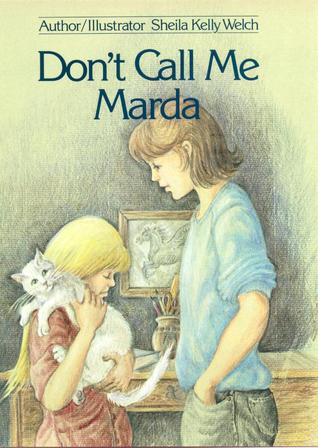
A) Although I write fiction, all my books and stories contain bits of truth, which are extracted from reality and reshaped by my imagination. I wrote my first book, “Don’t Call Me Marda,” shortly after we’d adopted two children, bringing the head count to seven. My mother-in-law did not react well to the news. I found myself thinking about other children whom she would have been even less pleased to have join our family. My imagination created a little girl named Wendy, inspired by a child I’d taught in one of my special education classes. While our pre-existing family was in the midst of the struggle to accept the newcomers, it seemed logical for me to write a story from the perspective of a child whose parents decided to adopt a little sister who was developmentally delayed. To her credit, my mother-in-law loved the book.

After that first novel, I revisited the subject of adoption in several short stories, but most of my writing concerned other topics. As the years went by, I learned how some of our kids had lived before we ever met them. They had existed in a world that was fragmented, chaotic, even frightening. My husband and I sometimes wondered if we could help these kids. Sometimes we felt as though we were failing as parents.

One of the hardest parts for us was realizing that several of our children resented us and did not appreciate that we were trying to give them a better life. But then I thought about how traumatic adoption must have been from their perspective. Imagine moving to a new home, school, and neighborhood when you were eight or nine or eleven years old. Then add onto that a new set of parents who expected you to act like their son or daughter when you had only met them a few months before.

No matter how difficult a child’s former life had been, leaving it behind could feel like waking up to a bad dream. I decided I needed to tell another adoption story. This one would explore the conflicting emotions of an older child who had been adopted. So I imagined T.J., and he was waiting to tell me the truth.

Q) For you, what is it about storytelling that fuels your passion?

A) My mother hated to write, but she told stories about her childhood that I loved and still remember. When I had rheumatic fever in second grade, my doctor prescribed nearly six months of convalescence. Listening to my mother’s tales, drawing, and reading were my means of escaping the confinement of my bedroom. When I was about nine, my older sister (now a poet and a psychologist) wrote a whole book for me. Stories, I realized, could entertain, inform, and illicit powerful emotions.

Storytellers and authors of fiction are a bit like magicians, conjuring tales rather than rabbits. They toss their stories out into the world, and hope an audience will catch them and love them.

When my mother was getting quite senile with Alzheimer’s, I visited her and read aloud a fantasy novel, “Land of Another Sun,” that I had written. She listened intently, laughing and nodding at appropriate places as I read. When I finished the last chapter, and the children in my story – along with an ornery cat – were returned to Earth via a magic bubble, my mother smiled and said sincerely, “I remember. That really happened.”

My first impulse was to correct her. But then I thought about the little girl character like my daughter who loved gum, the cat who said exactly what our cranky cat would have said if she could have talked, and the tan-skinned boy who loved to read just like our son. Yet I knew my mother was actually talking about a magic bubble. It was a bubble I’d created, but to her it was real, and that made her happy. So I said, “Maybe it did happen.” And I felt as if we’d shared a moment of magic. It’s those moments that keep me writing.

Q) My curious side: How did you and your family end up living outside of Forreston?

A) I grew up in the rolling hills near Boyertown, Pennsylvania, with my brother and sister plus cats, dogs, goats, and horses. So living here is not that different from living there. But in between my husband and I had quite a few homes: an historical house in Germantown, Pennsylvania (we were caretakers); three country places in Minnesota (we bought and sold a farm and my husband worked as a dairy herdsman); graduate student housing at University of Wisconsin (my husband was getting his Master’s in Library Science); an apartment and a house in Rockford, IL.

In the fall of 1986, we moved to this old farmhouse surrounded by cornfields. The house we owned in Rockford would have been too small for our five children with the addition of the two boys who joined our family a few months later. At the time, we also had three dogs, five cats, and five horses. Needless to say, we needed more room.

Q) While in your thirties you had to have a heart valve replaced. How did that change your outlook on life?

A) After the surgery, I could actually hear the artificial valve ticking and still can, fortunately. I’d always intended to write stories for children but had been so busy that I’d relegated that goal to a distant “someday.” Listening to the tick, tick of my heart made me quite aware of the passage of time, and I realized that I needed to get to work. My first short story was published two years after the operation.

Having such an amazing, lifesaving procedure has made me very grateful to be alive. My outlook has remained focused on what I feel are the most important aspects of my life, including my family, pets, volunteer work, as well as writing and illustrating. Several years ago, I was diagnosed with Parkinson’s disease. This neurological condition has forced me to cut back on many activities so that I have the energy to pursue creative work. I’m fortunate to have a very supportive husband who’s taken over most of the household tasks.

Q) You and your husband adopted school aged children. What led you down that loving path?

A) Shortly after getting married, we talked about having six children. But I knew that my heart had been damaged by rheumatic fever, and I probably wouldn’t be able to have that many. We agreed that adoption would be a good way to form a large family. At the time, I was teaching special education classes at an inner city school. One day, my students asked me if I planned to have children, and I replied, “Yes, six.”

The class of all girls was shocked. “Six? Why you want six kids? That just crazy!” But when I mentioned that my husband and I planned to adopt, they were all for it.

One girl raised her hand. It was Leila, a difficult thirteen-year-old, who caused more than her share of trouble at school. “Would you adopt me?” she asked. I didn’t think she meant it literally, so I told her that we weren’t ready to have a child yet and when we were, we’d get a baby.

Many years later, after we’d adopted two infants and had one biological child, I saw a picture of a brother and sister in a book that listed waiting children. I could almost hear Leila’s voice asking if I was willing to adopt her. When I showed the photo to my husband and asked if we should get them, he answered, “Sure. Why not?” And the adventure began . . .

Q) Any parting comments for your readers?

A) First I want to thank you, David, for asking very good questions that made me dig into my memories. I also want to mention how much I appreciate my family, friends, SCBWI-IL, and ABC Writers who’ve been so supportive and kind over many years. I extend a special thanks to Carole Dickerson, library director, and her staff at Freeport Public Library, and to Stephen Roxburgh, publisher and editor at namelos.

Many readers would like to be authors themselves. My advice is to write about what has meaning and importance to you. Toss your stories out to the audience and hope some people will love and appreciate what you write. And keep reading! Thanks!