DA Kentner is an award winning author who also enjoys meeting and interviewing authors of many genres.

As author KevaD, my novel "Whistle Pass" won the 2013 EPIC eBook Award for suspense. Previously, in 2012, it won a Rainbow Award in the historical category. "Whistle Pass" is currently out of print, though I'm considering finding a new publisher, or self-publishing the novel. What do you think?

"The Caretaker", a 3,000 word short story, won 'Calliope' magazine's 18th annual short story competition. Click the blue ribbon to view their site and entry rules for this year's short fiction competition.

Monday, February 28, 2011

Best-Selling Author Charlaine Harris

Yes. Charlaine Harris is a New York Times best-selling author. Yes. She is quickly becoming a household name in conversations from quilting circles to high school hallways both through her writing and the advent of HBO’s “True Blood” series based on her Sookie Stackhouse novels. Yes. It “only” took her a quarter century to attain this level of popularity. And, yes, she is talented - - very, very talented.

But did you know, besides her husband, children, dogs, and one duck (I don’t know why only one either), the Mississippi Delta native now living in Arkansas is passionate about improving the lives of people at home and around the world?

Ms Harris is an advocate for Doctors Without Borders, Habitat for Humanity, the ASPCA, and the Crime Lab Project. The Crime Lab Project promotes bringing crime labs into the modern age - helping law enforcement and victims identify and capture criminals. CSI is TV, folks - - fiction.

If you really want to help make a difference, join with Ms Harris in support of organizations such as the Crime Lab Project. http://www.charlaineharris.com/

Q) DEAD UNTIL DARK, the first in the Sookie Stackhouse series, broke traditional genre boundaries and started an avalanche of new authors for enthralled readers. But all writers share a love of reading. What books or stories first captured your interest and inspired you to write?

A) DEAD RECKONING will be on the shelves in May, but THE SOOKIE STACKHOUSE COMPANION won’t be available until August 30. It wasn’t shaping up as quickly as we wanted, and I had some family things to deal with, so it got moved back. HOME IMPROVEMENT: UNDEAD EDITION, the latest anthology edited by Toni L.P. Kelner and myself, will be out August 2. I’ll have a story in DOWN THESE STRANGE STREETS (edited by George R.R. Martin and Gardner Dozois) in October. That’s my publishing year.

I loved Poe when I was very young, and I read broadly, anything I could get my hands on. I loved “Jane Eyre,” still do. I’m a great Jane Austen fan. But I also read lots of mysteries and lots of science fiction, particularly Ray Bradbury and H.P. Lovecraft. I was born wanting to write, I think.

Q) I’m sorry. I have to ask. What went though your mind when you learned HBO was interested in Sookie? She is, after all, your creation, a part of you.

A) Very fortunately for me, there were a lot of people interested in Sookie at the same time. HBO was not involved then; the interest came from Alan Ball, who later made a deal with HBO. I’m sure all of the parties involved would have done a good job, but of course when Alan expressed an interest, I was very excited. He’s such a great talent.

Q) Sookie is becoming a much beloved character. What do you think it is that draws people to her, and what was the inspiration that first penned her?

A) When I was framing Sookie’s character, I started with the basic premise that only a woman with some kind of disability, or severe problem, would date a vampire. I build her personality and her circumstances around that central core. I wanted to care for her, so I made her interesting to me, sympathetic, and fallible. I’m not interested in writing perfect people or superheroes. I think people like Sookie because she always tries hard to do the right thing, though she’s not always sure what the right thing is.

Q) Sooner or later, the other characters in your mind will demand their stories be told. Is there a particular one taking the forefront you can share with us at this time?

A) Ahhh . . . no. Those who talk, don’t do.

Q) Your passion and compassion for others is admirable and commendable. Is there a person in your life you attribute your caring heart to?

A) Absolutely. My mother, who died last September, was a great woman and a great Christian. Everything good in me comes from her and my father.

Q) With the current turmoil in the publishing world as it adjusts to the reality and future of Ebooks, what advice can you offer aspiring authors?

A) With the Borders closings and the advent of Ebooks, the future of publishing and writing is certainly changing month by month. We can either insist that the old ways were best and go under, or we can go with the flow and learn new ways of marketing and selling our work. I am a dinosaur in the publishing world; I’ve been on the shelves for over 30 years now. I urge aspiring authors to become wise in the ways of new technology, but not to ignore the basic premise that if you produce a really good book, someone will be interested. It’s all too easy to decide to skip the sometimes tedious and terrifying process of submitting your book to accredited publishers in favor of publishing your own work. This is both a good thing and a bad thing. It’s a good thing if you treat the e-process as respectfully as you would hardback publication with a major house. It’s a bad thing if you use it as an excuse to submit a sloppy manuscript with so many errors in grammar, punctuation, and content that the reader can’t see the bones of the story.

Monday, February 21, 2011

Author Judith Leger

Judith Leger's personal essay "A Heart of Compassion" appeared in "Chicken Soup for Mother and Son Soul," and again as one of the 101 Best in "Chicken Soup for the Soul: Tales of Golf and Sport."


Yet, surprisingly, this talented writer's preferred genre is paranormal/fantasy romance. From the mysterious specters in "Heart's Reunion" to an exotic white dragon living on a desolate world in the soon-to-be-released "Dragon's Wish," Ms Leger explores magic, illusion, relationships that should never be, and how love can overcome all obstacles – even death and planets a universe away.

Residing in Louisiana with her husband and family, Ms Leger is also a gifted artist who readily shares her love of horses through her artwork. And, she is a lady who isn't the least bit shy – about anything. Ms Leger can be found chatting on facebook or any number of blogs and Internet chat rooms. But, that's what's so special about her. In an age where the world has shrunk to a pinhead, Ms Leger remains approachable and always willing to take a few moments and talk with her readers or folks who simply have a question she might have the answer to. http://judithleger.weebly.com/index.html

Q) It took you 1½ years to submit "Dragon's Wish" for publication. What was it about this story that was so hard for you to part with?

A) Each author has a book of their heart. One that is more special than any other of their works. To me, Dragon Wish is that book. The story evolved in so many ways during the years I worked on it. I love the characters and the story. I hope once it's released the readers will fall in love with them too.

Q) Where does your intense interest in magic and paranormal come from?

A) My mother believed in the meaning of dreams. I followed in her footsteps. I am a deeply religious person but that is very personal and private to me. Not sure how I came to love magical things but I read Tolkien back in the '70's. When his other books came out, I was ecstatic. I wanted more. Deep down inside, I believe in magic and I wanted that magic to become a part of my writing.

Q) "A Heart of Compassion" is a piece of your life. How difficult was the decision to share that look inside you with the world?

A) At first I wasn't going to submit it to a publisher, but after several friends read it, they persuaded me to send it to Chicken Soup. It was contracted after about a year, then after the book was released Chicken Soup contacted me again to notify me that the story had been selected to appear in their 101 best sports book. I was so thrilled. The story was my mother’s day gift from my youngest son. Not a physical gift but one of the Spirit. Those you never forget and will always cherish.

Q) As a child, what books captivated your imagination and inspired you to write?

A) LOL, why Nancy Drew and Trixie Beldon, of course. What young girl in the late 60’s and early 70’s didn’t love those teen mystery solvers? I guess you’d call them the "Twilight" of their times. I really adored Trixie’s stories because there was an underlying hint of romance in the story, too. I suppose this is what prepared me for discovering romance books.

Q) You have two teenage sons at home yet. How do they feel about "Mom" writing tales of romance?

A) They think my friends on line are a part of my imaginary characters I write about. They just go with the flow as far as my writing goes. I guess they consider it one of their Mom's hobbies. Little do they know.

Q) You are so pleasant and outgoing. How many hours a day do you spend writing, and, how do you balance your writing career and family?

A) Why, thank you, David! That’s a wonderful compliment coming from a man I greatly admire. I promise you, balancing family, work, and writing is not an easy task. As an author, I have to set time aside for the writing. I usually do this at night. Some evenings, I can write for several hours, others, I’m lucky to manage fifteen minutes. Is it worth it? Oh, yes, always. I love to tell my stories and hopefully, I will continue to do so for many years to come! Thank you, David for having me here today.

Sunday, February 13, 2011

Actor, Singer, Gentleman, Richard Pryor Jr

"My name is Richard Pryor Jr. I am the son of Comedian Richard Pryor. It has taken me years being comfortable saying my complete name when meeting individuals."


Those sentences sum up the core of the man the child has become. Richard never assaulted the world with expectations of entitlement. That's not who he is, nor wants to be. He is a quiet, gentle man, until he's in front of a jazz band. It's then his soul releases a voice filled with his love of life and the music he can barely contain. Whether in a small club in Saginaw, MI, or the Trump Plaza, the man can make any song, from "Georgia on My Mind" to "I Feel Good," his own, and leave an audience on their feet, begging for more.

An extremely versatile actor, Richard recently completed filming the raucous comedy "College Debts" in which he costarred with Oscar-winning actress Celeste Holm, the psychological horror movie "Beyond the Basement Door," and a pilot for the TV sitcom series "Lizards" in which he plays the lead role as himself. He recently contracted a voice role in the upcoming animated feature "Storks" starring Ed Asner along with Joyce DeWitt and Kim Fields. Richard is also set to begin filming in March the zombie film "Meat Locker" with a tentative fall release.

Still, Richard remains the everyday man who says "Good morning" as he passes by on the street, pauses for that photo or autograph, and patiently waits in line to be seated at his favorite restaurant. He does these things because it's who he is. He is Richard Pryor Jr.

Q) Thank you for taking a few minutes to speak with me, Richard. You are such a passionate singer, where do you believe your love of music comes from?

A) I believe my passion from music comes from my spirit. I have been singing for years. As with most African American artists, I started at a young age in church singing gospel music and recorded two choir albums with the City of Refuge and Sounds of Deliverance both located in my hometown of Peoria, Illinois. I feel like I am breathing life into my body when I sing.

Q) Given your background and busy lifestyle, how do you remain so grounded?

A) That would be my mother Patricia Price's doing; when she was alive she always kept me down to earth. Even when I would visit my father's during the summer when he toured and had housekeepers and staff, I would come back home to mom and have to take out the trash and do the dishes. I totally respect her for giving me that.

Q) When you need a break, what do you do to get away and unwind?

A) Actually, cleaning and cooking is my comfort, especially during hard and difficult times. What a great way for me to unwind. I also love to attend comedy shows in the area to see "what's up" and coming.

Q) Having acted in film and plays, which do you prefer and why?

A) That is a hard question, I love them both. Anytime I can be on stage or in film I can just release and be someone else with a little bit of me intertwined within. On stage you have to project what you are portraying. In film you can totally lose yourself into that role; that is what I love about film. Having a director that will allow you to improv is also an asset. You identify with a role and pull out what is in that role that is a part of you.

Q) Where would you like your life to be in twenty years?

A) Not in a casket...LOL Actually, just being comfortable with a roof over my head, food in the fridge and taking care of or helping my family.

Q) At the end of the day, how would you like to be remembered?

A) He is Richard Pryor's son, but he is his own person with talents to stand on his own accord. He is Richard Pryor Jr.

Friday, February 11, 2011

Author, Journalist Margaret Rose

Many writers say how they have wanted to write their entire life. Multi-published author, journalist, advertising manager, copywriter, editor, wife, and mother Margaret Rose has done just that. By the way, she also raises roses.
Her first published piece appeared in McCall's Magazine – while she was in grade school.
After many years of writing magazine articles, Ms. Rose ventured into, and found, a successful niche in romance. However, she is so much more than a superb romance writer. Ms. Rose loves and is totally devoted to her family. And she isn’t the least bit shy about saying so.
As such, drawing on her love of her children, she has recently seen her initial children's book "First Spring" published, with more on the way. Simply put, her children have inspired Ms. Rose to share with the world the joy they have instilled in her heart.

"First Spring" is a poetic story of a toddler discovering the wonders of a world previously hidden under layers of snow. Marina Movshina's eye-catching artwork completes a recipe that produces a reading experience children and parents will savor again and again. http://margaretrosewrites.blogspot.com/

Q) You open your life to the world, not just through your stories, but on your blogs as well. There isn’t much a reader can't learn about you. Why is sharing who you are so important to you?

A) Thank you very much for inviting me to share my books and ideas with all your readers.

I hope there is a lot of information my blogs and websites don't divulge! However, the Internet has created an opportunity for people to connect. My life is so much richer for many of the people I have met online. Many are now friends I send Christmas and birthday cards to. I've had lunch with some and even vacationed with them. They teach and support me, which is crucial. The readers, authors, and friends I reach out to don't want to have my latest book promotion crammed at them constantly. That's why we fast forward television commercials and switch radio channels! Having a very good understanding of how to use social media enables me to become as real as I want to be in an online community or to an individual. I am not a character in my books. Writing is what I do. If I can get you to know me as a person, I think the propensity to look at my promotional posts, and yes, even buy one of my books increases.

Q) Considering how much your children inspire you, why did you choose to wait until now to publish your first children's book?

A) *laughs* I've been busy raising those little monsters! In all honesty, I never dreamed of publishing a book of any sort. I'd had it drilled into my head in college that I was no good at character or plot development. I found the methods taught for play writing to be tedious and restrictive. In short, I believed that professor. I'd followed my dream to become a professional writer many years ago. Four years ago, I finally eked my way into fan fiction and then romance. With a small amount of success under my belt, I took out First Spring on a whim and submitted it. Lucky for me, Guardian Angels Publishing snapped it up.

Q) Your life is so busy, how do you set aside time for your family?

A) It's always a pleasure to get to know new people. When the boys were younger, I did most of their outings and school things with them. Now that they're older, my husband does a lot of those things. He definitely pulls his weight around the house and with the family. Some things are sacred to me, however. Meals together, tucking them in and waking them up, sending them off to school and greeting them personally when they come home are things I do every day. We go to church as a family and volunteer there. My husband I attend their concerts and events, and volunteer for their activities. We feel strongly that we shouldn't just drop our kids off and never become involved.

Q) There is a surge lately in books infusing young adult novels with sex. As a mother and author, how do you feel about this?

A) I'm planning a YA book this summer, but there's no reason for this particular story to include sex. These books can be highly entertaining without it, but publishers will confirm and I won't deny, that sex sells. Many of these young adult books are wonderful if you choose age-appropriate stories. Pre-read the book or at least scan it beforehand, and discuss it afterward if you've given the green light to read.

As parents, we have boundaries in our home about how sex affects our children. I think a lot of the YA books coming out discuss sexual identity and acceptance. I'm supportive of that as long as my child understands that their questions should come to us. Even the questions that make me squirm or angry. I don't want my child to think letting him read a book about sexually active teenagers is also giving him some sort of unspoken permission to behave similarly. I won't abdicate my parenting responsibilities by giving my child a fiction book to teach life lessons instead of giving my time.

Q) For the countless mothers who have cooed and whispered impromptu poems and stories in their child's ear, and told they should be a writer, what advice do you have for them?

A) Write these poems and stories down. First and foremost, they are a gift to your child, precious beyond any kind of fame you might experience should they be published.

Second, learn the mechanics of good writing, so if you decide to submit your work to a publisher, you won't be rejected on poor technical skill.

I don't recommend writers to collaborate with an illustrator in advance. It's hard enough to get your manuscript contracted without worrying whether the publisher will also like your art.

Publishers are extremely busy, and children's publishers even more so. Many children's book publishers are closed to submissions because of extremely long backlogs, many require an agent, others accept submissions only certain months of the year. You must put your very best foot forward and be prepared for rejections. Many of us are willing to help newbies navigate the terrain. Publishing is complicated and fast-paced. Reach out.

Friday, February 4, 2011

Educator and Author, Dr. Kieran Egan

Concerns surround the educational evolution of today's learning institutions. It is a topic widely discussed both publicly and privately.

Dr. Kieran Egan has proposed a solution for raising the quality of learning within our schools – completely rebuilding the education system.

Dr. Egan has been spreading his message of the need for improvement in our children's learning behavior for decades, but it was the release of his book "The Future of Education: Reimagining Our Schools from the Ground Up" which caught the attention of the general public. "Learning in Depth: A Simple Innovation That Can Transform Schooling" is scheduled for release March 15th and has already stirred much debate and controversy.

"Imagine a future in which it would be routine for schools to randomly assign 1st graders one topic to study through grade 12, along with the regular curriculum. Students would learn about birds, apples, the circus, railways, the solar system, and so on… Each student, by the end of his or her schooling, would know as much about that topic as almost anyone on earth."

While educators and parents react to and debate Dr. Egan's philosophy, what no one can deny is Dr. Egan's heartfelt concern for the educational needs of future generations. www.educ.sfu.ca/kegan/

Q) There are those who decry your work as individualization, the antithesis of perspective. How do you respond to those who believe your concept would tunnel the vision of students?

A) Well that might make sense as a criticism if the students did ONLY the "learning in depth" (LiD) project and stopped being involved in the rest of the curriculum. But LiD is designed as a small add-on to the regular curriculum, in which students might meet with their teachers for an hour a week or less. Much of the work would be done outside of school, like a hobby. I introduced the idea to some students in 2008. Two of the students, who were also teachers, decided to give it a try in their own classes. So in 2008/9 school year there were about 30 students working on portfolios on their topics. In 2009/10, there were more than 2,000 students involved, and this year there are many more, not only in the US and Canada, but in Greece, Romania, Australia, Iran, Japan, England, and other countries.

I confess I am puzzled by the notion that learning a lot about something like apples or beetles or railways or birds will somehow damage students' minds and make them "narrow." Humans like to learn, but the institution of the school is not always hugely successful in harnessing this engagement with knowledge. The LiD project is one of the few things students do in schools that is not coerced. It is entirely voluntary and students can stop at any time, and there are no tests. So far, I am not aware of any student dropping out or wanting to change their topic. In fact, for very many students, their LiD study is one of their favorite school activities.

Q) How much, if any, did the philosophies of Eastern European education influence your work?

A) I suppose this depends on whether you are classifying Vygotsky as eastern European. If so, then yes, I have found Vygotsky's work stimulating in a number of ways. But I confess to much ignorance about other eastern European philosophies.

Q) No one can work 24 hours a day. What relaxes you when you step out from the halls of Simon Fraser University?

A) I like to kayak, I have built a couple of Japanese gardens (see www.educ.sfu.ca/kegan/Japangardenhome.html --where you can read, and see pictures of, the slightly crazy construction of a Japanese-style garden and "tea-house" at the back of our yard. Originally called "Building a Japanese garden--the Irish way," the eventual publisher of the book, Houghton Mifflin, changed it to the--I thought--uninteresting "Building my Zen garden." I also enjoy traveling to exotic places giving talks: Tbilisi, Cluj, Sao Paulo, Kyoto, Tønsberg, Falun, Pittsburg, etc.

Q) You are a dynamic and energetic speaker. In fact, one commenter compared you to a Monty Python performance. Who instilled such enthusiasm in you?

A) Well, that may be an overly kind observation. I think we come with a package of dispositions that either get supported by early interactions with the world, or they get discouraged, deformed, frustrated, whatever. I like Philip Larkin's response to a similar self-addressed question about basic characteristics: "They're more a style/ Our lives bring with them: habit for a while/ Suddenly they harden into all we've got/And how we got it." Elsewhere he is even more eloquent in response to a similar basic question, and this encapsulates my answer better: "Beats me."

Q) Without significant change, where do you believe North American education will rank in the world in twenty years?

A) In a companion book to the "The Future of Education," called "Getting it Wrong from the Beginning" (also published by Yale University Press), I argued that current US thinking about education remains imprisoned by 19th. century beliefs, influentially articulated by Herbert Spencer. If American educationalists continue to believe that the dominant forms of educational research will yield them knowledge about how to educate better we will continue a gradual decline into increasing ignorance, triviality, and lack of understanding of both our cultural heritage and the complexity of modern forms of life. But I don't think North American education is unique in the kinds of defects I try to point out in the two books mentioned above, so in a comparative sense we may not seem to slip much further down some league table. But we will have a hard time, and will likely have to import expertise, to sustain our technological culture and economy--we are not producing enough sufficiently skilled, competent, and knowledgeable people. This failure might bother people in terms of our economic future, in competition, say, with China and India, but it ought to worry us more about being able to sustain democracy and civility. Ignorance has never been the best guarantor of freedom and democracy.

Most of my work, and that of my colleagues in the Imaginative Education Research Group (IERG) http://www.ierg.net/ is concerned with showing how we can engage students' emotions and imaginations in learning the contents of the curriculum. The current obsessions in North American education with pseudo-scientific educational research and stretching implications from that to practice, and then testing students on shallow performance of simplistic tests can only make trying to show that everything in the curriculum is full of wonder a really tough struggle.

Friday, January 28, 2011

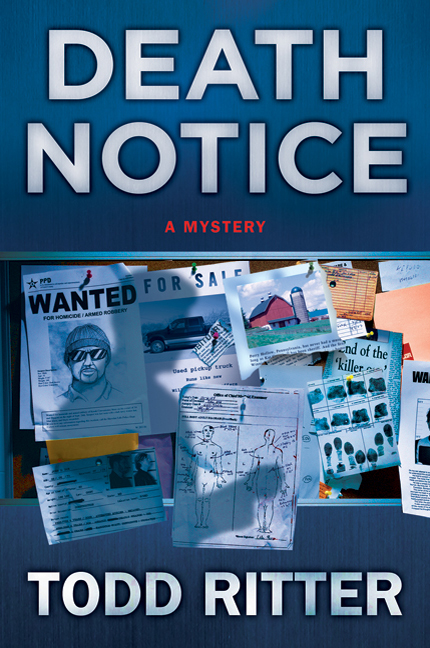
Author Todd Ritter

New Jersey journalist and editor Todd Ritter is a fan of Walt Disney and Alfred Hitchcock. Raised surrounded by forests and open fields in Pennsylvania by a bank teller mother and a father who dabbled in taxidermy, it seemed only natural such a unique blend of life experiences would influence Ritter's debut novel. But any chemist will tell you certain mixtures can be volatile. "Death Notice" exploded onto the literary scene, serving notice a fresh and exciting new voice had arrived.


In "Death Notice," Ritter captured the benign in a net of intrigue, and within the laboratory labyrinth of his mind morphed the commonplace into a community wrought with secrecy, characters we won't soon forget, and of course, nightmarish murder. Naturally, such a powerful and blood-chilling tale leaves the reader wanting more of Todd Ritter. Fortunately, the next addictive dosage, "Bad Moon," is forthcoming.

Therein lies the true quality of Ritter's work. Todd Ritter is a storyteller. Every word is utilized to its maximum proficiency to entertain the reader. And entertain he does. "Death Notice" is un-set-a-side-able. www.toddritteronline.com.

Q) You discovered being a published author isn't an easily pursued career. During the 2+ years of searching for a venue for "Death Notice," what pushed you to keep going and not give up?

A) At the risk of sounding unbearably egotistical, I knew I had a good story on my hands. Those who read “Death Notice” — both inside and outside the publishing industry — really responded to the concept and the characters. That input spurred me to keep working on it and to fix all the parts of the book that didn’t work. It took a lot longer than I thought it would, and there were times when I was very close to just throwing in the towel and moving on to something else. But I kept going because I loved my story and I loved my characters. I wrote the book that I wanted to read. And deep down, I knew others would want to read it, too.

Q) Describing your writing, you once used these three words: Morbid. Surprising. Sympathetic. Why those choices? And would you use the same words today?

A) I would still use those same words. I like to think that’s exactly what my writing is like. Clearly, all mysteries are a tad morbid. And hopefully they’re surprising, as well. “Death Notice” deals with pretty gruesome themes and goes to some very dark places. But I try to balance all that by respecting the characters and making them as real and believable as possible. I think some thriller and mystery writers forget that murder leaves behind a lot of collateral damage, not only for the victim’s family but for the people investigating it. That’s where the sympathy comes in.

Q) "Death Notice's" Police Chief Kat Campbell has a child with Down Syndrome. Experience has taught me, when a writer inflicts a child with such a disease it is because said disease has impacted their life. How did Down Syndrome play a role in yours?

A) To be completely honest, it didn’t. When I first started writing “Death Notice,” I wanted to introduce readers to characters they might not have seen before. I knew I was going to have a woman police chief, and I wanted her job to be only one aspect of her life. That’s when I got the idea for James, her son. Originally, I thought it would be a great way to humanize Kat while simultaneously showing her strength. Because raising a child with special needs is tough. The mothers who do that have more strength and patience than I ever will. But as work on the book progressed, James became less a story device and more of an interesting character in his own right. In the follow-up to “Death Notice,” I develop his character even further, in a way that creates new challenges for Kat.

Q) Your influences are Disney and Hitchcock, yet Hitchcock obviously won out. Why?

A) Because I love being scared and being on the edge of my seat. Hitchcock was the undisputed master of that. Growing up watching his movies, I knew I wanted to do the same thing. There’s something very cool about telling a good yarn and giving readers a nice fright. Judging from some of the e-mails I’ve received from readers, I’ve done just that. There’s no greater feeling than hearing that someone couldn’t put “Death Notice” down because it was so suspenseful.

Q) As a journalist and author, writing follows your every step. What do you like to do when you need to get away?

A) I love being a couch potato. I tend to avoid the dark dramas and go for something funny and smart, like “Modern Family” or “Parks and Recreation.” I also like to cook, which is another great way to escape. I can just turn off my brain and chop, mix and stir. There’s something very therapeutic about that.

Friday, January 21, 2011

Award Winning Author Dana Marton

With over 1.5 million books sold and the recipient of awards such as the Daphne du Maurier Award of Excellence, Reviewers Choice, and Best Harlequin Intrigue, Dana Marton has established herself as one of today's preeminent writers of romance.


Her stories revolve around nail-biting plots, nail-tough heroes, and heroines who melt iron hearts.

Dana epitomizes the modern-day woman balancing career (she spends around 8hrs a day writing), family, home and aspirations. In her precious little free time she gardens, scours flea markets for bargains, tries to keep up with Peanut the Destroyer, her exuberant beagle, and occasionally finds time to knit and paint.

It is when Dana sits down to write that this "every woman" transforms into the extraordinary. From her mind and fingertips emerge exotic tales of ancient Egypt, treasure-laden caverns, spies next door, intrigue, suspense, danger, and above all… love.

Nearly two dozen of Dana's novels have been published by Harlequin, and there are more on the way. From "Shadow Soldier" to "Sheik Seduction" to her latest "The Spy Who Saved Christmas," Dana continues to mesmerize fans around the world. Her work has been published in seven languages in eleven countries.

There seems to be no bottom to Ms Marton's well of writing and story-telling abilities.

And with tens of thousands of readers eagerly awaiting her every offering, we can only hope to enjoy many more years of Dana Marton novels. http://www.danamarton.com/

Q) You are one of the "overnight" success stories – it only took you 13 years to be published. There had to be a time when you considered giving up. What pushed you to continue until your work finally found a home at Harlequin?

A) The ideas in my head just won't quit. It's easier to write them down than to get them to keep quiet. Honestly, after starting that first manuscript, I don't think I had a choice. Some doors cannot be closed once they are open. Writing has many rewards that have nothing to do with the work being published. Even if nobody would ever publish another book of mine, I'd still keep writing. It's an amazing learning experience and a journey of self-discovery, a creative act that builds my soul. I'm not sure how entertaining my books are to readers, but writing them is enormously entertaining for me! It's the most fun I ever had at work.

Q) There's a rumor you read your first Harlequin Romance novel… at work… and decided then and there Harlequin was your dream publisher. Any truth to that story?

A) Well, that depends on whether my ex-employer is reading this.... Okay, seriously, yes, pretty true. I was a part-time receptionist who watched the phones at a company, working 2nd shift. I shared a desk with the 1st shift receptionist who was a voracious reader of Harlequin novels and used to leave books by the dozen in the drawer. Thank God, since I had no money those days and could have never afforded all those books. In my defense, 2nd shift was really slow. Rarely did anyone call. It was either sit there and stare at the wall or sit there and read. I could never resist a stack of books. Especially not books that combined amazing stories of romance and adventure. I was hooked from the first.

Q) Writing and editing sucks time away like a vacuum cleaner in a bowl of dust. How do you juggle your career, home and family? And, how supportive is your family of your writing?

A) Writing is my priority. I write before I do anything. My family is amazingly supportive and they were supporting way before I ever sold anything. At one point my husband even offered to sell his car to improve our finances so I could stay home and write full-time for a while. We came close to having to do that, but I ended up selling my first book a few months later. Since I've been writing for a living, everyone chips in during deadline time. Dishes, laundry, cooking, cleaning, grocery shopping, you name it. All the credit for my books should go to my family.

Q) You personally seem to be attracted to sheiks and desert locales. What do you find so enticing in those settings?

A) Actually, my favorites are international intrigue and survival action/adventure stories. The sheik and prince angle tends to come from my editor. I love exploring other cultures and I do travel widely, despite my fear of flying. It's fun to see other countries and see how other people think, notice all the small and large differences in lifestyles, etc. I think cultural diversity is a huge treasure and an asset to this world. I never understood racism.

Q) What would be the perfect morning of the perfect day for Dana Marton?

A) The first day of a new story is the most amazing thing. The possibilities are wide open. There's a sense of anticipation. The present is still unopened. And I get to do that next Monday! I'm starting a new book, LAST SPY STANDING, that's set in South America. It'll be a Sep. 2011 release. I can't wait to get started. As I go on with a story, options become more and more limited. Plot questions asked at the beginning must be answered at the end. Characters need to act in character, etc. But at the beginning, there are no restrictions yet. I could come up with the wildest opening sentence and make it work. The beginning of the story always has a sense of limitlessness for me.

Friday, January 14, 2011

Multi-Award Winning Author Juliet Marillier

Australia's Juliet Marillier has won numerous literary awards including an American Library Assoc. Best Book, a Le Prix Imaginales and 3 Aurealis Awards. Yet, writing professionally didn't come until later in life. Ms Marillier is a gifted musician who taught high school and university music. An opera singer, she is also an experienced choral conductor.

"Daughter of the Forest," her first published novel, released to acclaim and was soon published in the U.S. and U.K. as well as New Zealand and Australia. This fairy tale told in an Irish setting became the first of the "Sevenwaters" trilogy (a fourth and fifth book have since been added). Her repertoire of stories expanded to four series plus the stand-alone novel, "Heart's Blood."

Ms Marillier's unique blend of history, folklore, romance and family drama continually leaves readers spellbound and awaiting her next beguiling tale of human relationships and personal journeys. A member of the druid order OBOD (The Order of Bards, Ovates and Druids), her characters' interaction with the natural world around them reflects the author's own spiritual values.

While Ms Marillier would appear at the top of her game, life isn't always fair, nor scheduled, nor easy. In 2009, Ms Marillier was diagnosed with breast cancer. It was then, as so many women (including my own now deceased mother) can attest to, Ms Marillier had to find strength previously implanted in her fictional characters.

And, true to form, Juliet Marillier has risen to the challenge and chosen not to surrender, but to wage battle on her own terms against this disease.

For more on Ms Marillier's breast cancer experience: http://writerunboxed.com/2009/05/07/changes/

Q) Obviously, my heart and prayers go out to you, but I must ask (as the son of a prior cancer survivor) where do you stand today in your battle with cancer?

A) I’m doing well, thank you. It’s now almost two years since my initial diagnosis, which was picked up on a routine mammogram – there were no warning signs at all. Between March and November 2009 I had surgery, chemo and radiotherapy. Thus far my tests have remained all clear and I’m feeling well. Like many survivors of life threatening illnesses, I have a new appreciation of what is really important in life. I remind myself of that when I get grumpy about things like deadlines or bad reviews. In the bigger picture, they don’t matter in the slightest.

Q) You have an incredible gift of music. What inspired you to transfer your energy and passion to writing?

A) I’ve always loved both books and music. My parents were musicians, one professional, one amateur, and both of them were keen readers. I did a lot of writing as a young person but I chose music as a career. The desire to tell a story bubbled to the surface later in life, during a time of personal crisis and life-changing decisions. That was when I wrote my first novel, “Daughter of the Forest”. From there my career as a novelist developed more or less naturally.

Q) Genre tags tend to shelve and categorize a writer. To my personal amusement, many have tried and failed to box your work under a specific label such as gothic, fantasy, or supernatural. What do you consider your stories? Or are some people simply overcomplicating obvious historical romances?

A) That’s a great question. I do believe my work spans quite a few genres: historical novel, fantasy, romance, adventure, family saga, even gothic/ghost story in the case of “Heart’s Blood.” I quite like the fact that they are not easily boxed. For instance, I have many readers who tell me they don’t read any other fantasy, but love my books. I don’t consider my novels to be any particular genre. I just write the stories that I want to write and leave such categorisation up to booksellers, librarians and readers. While my books are set in real history and all contain love stories, they are probably a bit more than historical romances because of the strong folkloric and magical elements, the spiritual aspect, and the way they delve quite deeply into human motivations and personal journeys.

Q) You have been called a "folklorist." Fans have been known to challenge writers' research. To that end, you have traveled to places such as Turkey gathering background information for a story. How do you contend with critics and do you welcome readers' questions regarding your extensive research?

A) When I make factual errors, and I’ve done so several times, I’m happy for readers to let me know – sometimes these things can be fixed up in a later edition. Often it isn’t the history but something like making a flower the wrong colour or putting a New World vegetable in early medieval Europe (we caught that one in time.) On my website there’s a Q&A where I list these errors and their corrections. With experience, I have become much more thorough and careful in my historical research. In my original Sevenwaters trilogy, the history is quite flawed because I was writing with a fairy tale in mind, and I figured if readers could accept magical beings out in the woods they wouldn’t be troubled by a little historical inaccuracy. Mostly, they weren’t, but in retrospect the dodgy history bothered me a lot, and if I were writing that series again, it’s the first thing I would fix. When readers tell me about an error, all I expect is that they check out the website first to make sure I don’t already know about it. And they should tell me politely!

Q) Should the day come you decide to set aside your pen, what message do you hope to leave within your writing for readers?

A) Find the courage within yourself. Move forward bravely through whatever challenges life presents. Respect others, with all their flaws, and respect yourself. Learn the value of love, faith, honour, integrity, comradeship, family. These old-fashioned virtues will light the darkest pathway. http://www.julietmarillier.com/

Friday, January 7, 2011

An Interview with Bestselling Author Cherise Sinclair

Cherise Sinclair novels held four of the spots in a Top Ten list for 2009. Very few writers will ever be able to achieve such a feat. To do so, an author must not only write superbly, but also captivate an audience willing to make not one, but repeated purchases of the author's work.

Award-winning Cherise Sinclair has garnered a devoted following that is increasing with each new book.

Born in Iowa and currently residing in California with her husband, children and domineering cats, Ms Sinclair has become a powerhouse in the literary industry within the genre of . . . BDSM – Bondage, Discipline (dominance), Sadism, Masochism.

What sets Ms Sinclair apart, endears her to readers around the world, is her ability to intertwine the erotic elements of BDSM into romantic tales of love so strong, so powerful, the reader can't help but cheer when the leading man and woman finally fall into each other's arms.

The "Masters of the Shadowlands" series continues to reign supreme on Amazon's Kindle listings, while the combined romantic, science fiction & BDSM tale, "The Starlight Rite" holds top one hundred places in three separate categories, and her latest, "Master of the Abyss" is the #9 bestseller on two Kindle lists.

Yeah. Cherise Sinclair is one heck of a writer. http://www.cherisesinclair.com/

Q) To what do you attribute the growing reader/buyer interest in stories involving BDSM?

A) There’s probably a myriad of reasons, but I’ll give you a couple:

* To stay ahead of the increasingly hot mainstream romances, erotic romances must increasingly push the boundaries toward more ‘kink’, which is why BDSM is no longer considered outrageous. In addition, women now demand in their literature all the variety that men have enjoyed for so long. (‘Bout time, too)

* During the feminist movement, in order to stay politically correct, authors would emasculate their heroes to some degree. Even now, writing a dominating hero without crossing the he’s-an-arrogant-asshole perception can be tricky. However, with BDSM and a consensual exchange of power, the more dominant a hero is, the better. Cuff her, spank her, order her around? If it’s safe, sane, and consensual, it’s all good.

Q) What on earth first compelled you to write a story about finding love in the world of BDSM?

A) It sure wasn’t a planned career change. A couple of years ago, I was having health problems and feeling very unfeminine and unsexy. So I put aside the mainstream book I’d been working on, and--just to please myself--wrote the most erotic story I could think of. Just for my own pleasure.

Of course, once it was done, I couldn’t throw it away. A friend, Amber Green, recommended her epublisher, and I sent it off. When Loose Id bought it, I wasn’t sure whether to be thrilled or horrified. An erotic romance writer? Me?

Q) I'll wager your parents didn't read you bedtime stories about handcuffs, chains, and rope. What books did enthral you early on?

A) Oh, I was a nerd and read everything. From religious Grace Livingston Hills to Heinlein’s "Stranger in a Strange Land," from Bertrice Small to James Bond books, from Guideposts to the Penthouses under my big brother’s mattress. Focused, I wasn’t--and I haven’t changed much. I loved the library. I knew I’d gotten a hot story if the librarian gave me an over-the-reading-glasses look and asked, “Does your mother know you’re reading this?”

Q) How does your family feel about your chosen genre, and, do you foresee a shift in genres, one without BDSM, in your future?

A) My family is still a little off-balance, especially my big brother. I, of course, tell him it’s his fault I’ve gone over to the dark side--maybe if I’d never read his Penthouse or Playboy magazines in my tender, formative years…

My husband enjoys it all, including helping with research. Ah…yeah. Actually, he insists on helping with research.

I might eventually try my hand at seeing if I can create a very dominant hero for a mainstream romance. Just for fun. Then again, look how much trouble I got into last time I wrote something just for fun.

Q) Any advice for those who have a story to tell, but have yet to write it?

A) Ahem. Beginning writers: line up right here in front of me (and be grateful that I left the flogger under the bed). Very nice. Now ‘splain to me why you’re reading this instead of working on your story? Yeah, that’s what I thought. Listen carefully: I want you to sign off the Internet, plant your butt in the chair, and get to writing.

Sure it’s good to read craft books, join critique groups, and play with writing software. However, those activities are all secondary. Write! Think of riding a bike. You buy the bike, read the manual, listen to advice--but if you don’t actually climb on the darn thing and pedal, you’ll never be able to pop a wheelie.

Now go--get to work.

Monday, January 3, 2011

An Interview with Author and Artist Fiona Jayde

While Fiona Jayde’s romantic thriller novels such as "Night Haven" and "Pas de Deux" may, unexplainably, not have found their way to your library yet, it is likely you possess a sample of her artistry. For Fiona’s artwork has graced the cover of numerous novels, and the popularity of her work, and the demand for it, only seems to be increasing.

Admittedly, I rarely look to see who created the cover that plays such an important role in drawing my attention to a book. But, the cover is the initial impression that separates one novel from all the others on the bookstore shelf. It commands our attention, encourages and seduces us to place the book in our hands and read the tagline, then, hopefully, the blurb, and ultimately the first few paragraphs, maybe the full first chapter.
The cover whispers, “Read this book… buy this book.”

While the cover plays such an important, almost critical role in a potential reader’s first impression, the cover is also the one thing the average author has the least amount of input into. The publisher has the final say, not the writer.

Ironically, as a consumer, you and I care little about who created the cover and don’t buy the book because Fiona Jayde developed the jacket. But if the artwork is cheap or tacky in appearance, many pass by the book, assuming the story will reflect the same lack of professionalism. We subconsciously conclude that if the cover doesn’t draw our interest, how could the story?

And therein lies Fiona Jayde’s popularity. Her artwork stops our eyes and hypnotically commands us to pick up the book. We may not buy the book in the end, but we walk away mentally mumbling how ‘neat,’ ‘cool,’ ‘awesome,’ or ‘intriguing’ the cover was.

Yes, dear reader. Every time we buy a book, we help put food on an artist’s table. http://fionajayde.com/

Q) You are an outstanding writer, yet, had a desire to let your artistry flow to design. How did you convince that first publisher to give you the freedom to design a cover?

A) Thank you! I'm fairly "scattered" in my personal hobbies and interests - in addition to writing and designing, I also play a bit of piano, take martial arts classes, and do some web developing on the side. Its all "artistic" in its own way, even the coding.

As far as convincing that first publisher to let me design cover... well, honestly? A hint of blackmail. I had a series my publisher wanted to condense into a collection and re-release as a bundle. I agreed, with the caveat the publisher would consider my own design for the cover. They had the right to tell me I was full of it, but at least they would look at it. Luckily for me, they liked it enough to publish the collection with that cover. This particular book is no longer in print, but it gave me the start of my "official" cover art career.

Q) What does the process entail for creating a cover? How are you inspired, and just how much do you actually work one-on-one with an author?

A) I usually base covers on what the author envisions - and really, what the author wants to "feel" about the book. I'm known to sometimes ignore an aspect or two in favor of the cover "feeling" right. As such, the most important thing for the author to do is give me examples of what the book visually feels like - dark and moody, magic, a fun romantic comedy, etc.

I'm more of a designer than actual artist - I can't really "make" anything visually (I have a degree in Studio Arts and barely can draw a stick figure), but I have knack of fitting things together into one cohesive image. Usually I'll troll through various image sites and get ideas from other people's art (as well as author provided samples) for inspiration. Much like writing, sometimes the design takes over half way into the process - and that's the most fun (and the most frustration).

I can't say I work one on one with the authors too much, although there have been occasions. My job is not to represent characters or settings exactly how they are in the book - my job is to make the cover as intriguing and attention getting as possible.

Q) I have to ask this. Has there been a time where the publisher rejected your artwork for one of your own books?

A) Oh yes, absolutely. It was one of the first cover mockups I've made and I was convinced it was the best thing since sliced bread. The art director of the publishing house I was with didn't quite agree with me, and for the life of me I couldn't understand why he didn't see things my way.

These days I don't usually do my own cover art. Why? Because I'm my own worst client. It takes me days and weeks to agonize over a design. (Take a look at the graphic at my website for example - days and days of minor OCD). I drive myself crazy. As such, both covers for "Pas De Deux" and "Night Haven" were done by very talented cover artists at Samhain Publishing (Amanda Kelsey and Kanaxa respectively). I love giving my written works to cover artists I admire and seeing what they'll do with it.

Q) Do you ever use live models for your designs? Why or why not?

A) Live models as in take pictures of someone and then use them in a cover? I haven't really, as this is usually a cost issue for the publisher. (Plus I know nothing about photography or lighting or any other intricate details!)

However I'm involved in a mystery book series where the covers will be based on an actual live photo shoot. I'm really looking forward to it!

Q) Normally in the final question I ask the author to offer some advice to prospective writers, and feel free to do so. But, I’d really like to hear any advice or encouragement you can provide to young artists interested in designing covers for novels.

A) I think the advice would be the same for both - writing and cover art design - keep practicing your craft. The best way to break into the cover art business is to have a cover art portfolio readily available so that prospective clients can see your work very easily. (It can be for fake books if you have nothing else - which is how I got started!) Develop a portfolio of your best work and have it ready to go. Then simply talk to people, offer to do mockups, and always look for things that inspire you.

Friday, December 31, 2010

We lost our girl, Ginger, to cancer Monday, Dec 27th.
I held her in my arms, and we looked into each other's eyes until she was gone.
Words can't express the ache in my heart. I miss her.

Friday, December 24, 2010

An Interview with Iconic Author James Lee Burke

In an electronic age teeming with authors seeking fortune like the gold miners of yesteryear, James Lee Burke stands as not just the inspiration, but the aspiration of many. Yet, few will come to understand that within Mr. Burke is the true nature, the true heart, of a writer. James Lee Burke is the consummate literary artist. Book pages are a palette from which his words paint panoramic murals within the reader's mind and characters take breaths so real, a reader might be tempted to ask one to "sit a spell."

Mr. Burke's novels aren't books read and set aside. They are centerpieces of home libraries patiently waiting to be enjoyed again and again. I proffer "Heaven's Prisoners" as one such example. This novel is one of three turned into movies. Though published in 1988, this spellbinding story remains on the tips of tongues in readers' circles, commanding attention. "Heaven's Prisoners" has conquered the test of time.

Mr. Burke's latest release, "The Glass Rainbow," is on a path to ascend beyond the popularity of any in the Dave Robicheaux series.

The sequel to "Rain Gods," featuring Sheriff Hackberry Holland, is scheduled for a 2011 release.

Though a multi-award winning and Pulitzer Prize nominated author, Mr. Burke remains a grounded gentleman. He readily avails himself to fans through his web site's forum where he personally comments and answers questions. http://www.jamesleeburke.com/

Q) You and your wife are nearing fifty years of marriage – congratulations by the way. How has she enabled you to pursue your writing career?

A) Pearl always stuck with me through the hard years. She and I literally lived and worked everywhere from one coast to the other and did every kind of dirty job in between. We lived in trailers and Okie motels and she waited on tables and I worked on a pipeline and in the oil field and drove trucks and worked as a social worker on Skid Row in Los Angeles and so forth. The real credit for my career goes to my wife and children. They always believed in me and stayed the course.

Q) The Los Angeles Times referred to you as a "prose stylist." How did you develop your unique form of written expression?

A) The biggest influences of my writing style were Faulkner, Hemingway, Fitzgerald, James T. Farrell, Flannery O'Connor, Tennessee Williams, John Neihardt, and Gerald Manley Hopkins. Ultimately a writer departs from his mentors, but during the early years it's important to have good mentors.

Q) You have provided us with captivating tales for over forty-five years. What do you think is the key ingredient that keeps readers coming back for more?

A) My most successful work has been written in the first person by a protagonist based on the everyman figure in medieval drama.

Q) What inspired you to write your first story?

A) My cousin Andre Dubus won first place in the Louisiana College Writing Contest of 1955. In '56 I decided to have a run at it. I won an honorable mention and have been at it ever since.

Q) I want to share that a James Lee Burke fan drove a number of miles to come to my home, deliver one of your books, and ask me to request an interview with you. How does it feel knowing you have such devoted readers, and is there a message you would like to leave them?

A) It's a great compliment. That's why being an artist is such a wonderful life. You meet the best and most interesting people on earth.

As Gerald Manley Hopkins says, "Blessed be God for all dappled things."

Sunday, December 19, 2010

An Interview with the Very Unique Tony Schaab

So. What could a devout family man, Humane Society volunteer, Disc Jockey, actor, comedian, Troupe Manager of the comedy improvisational troupe "IndyProv," college enrollment coordinator, respected movie critic, and zombie aficionado all have in common?


They could all be writer and author Tony Schaab. Okay. They are all Tony Schaab. Early on, Tony developed a gift to look at the world through eyes that peel away the outer layers and see what many of us miss – the natural humor we were all born with and carry with us throughout life.

But Tony, for whatever reason, also discovered humor in… zombies.

And that unique combination has magnetized him to undead lovers around the world. His humor-laden, tongue-in-cheek reviews are so sought after, he has taken a step I'm sure other critics are soon to follow. He compiled 50 favorites into the recently released book, "The G.O.R.E. Score, Vol. 1".

Tony's short stories have appeared in numerous magazines, New Line Press contracted him for a stand-alone original story, and this multi-talented man has two novels on the brink of publication. Not to mention his short story, "On Ramp," was nominated for a Lambda Literary Award. And, Tony's sci-fi/horror novella, "The Eagle Has Reanimated," was just this week nominated for the Science Fiction Writers of America's Nebula Award.

http://tonyschaab.com/ http://www.thegorescore.com/

Q) Your innate humor permeates all you do. To what or whom do you attribute your comedic talent?

A) I'd have to say that my wit comes from a couple of primary sources. First, I have to thank my seventh-grade teacher, Mr. Hilker, for providing my younger self with his copy of the novel "The Hitchhiker's Guide to the Galaxy" by the late British author Douglas Adams. The book is a very satirical look at some of the things we as a society do that are pretty silly, even if we don't see it as such; it's written from the perspective of aliens that visit Earth, so it also heavily influenced my enjoyment of science fiction as well. The story really gave me my first exposure to satire and how comedy can be intellectually subtle yet effective at the same time. Another huge source of comedic inspiration is the great Mel Brooks; I grew up watching his hilarious movies, especially "Spaceballs," my all-time favorite film. An interesting side-note is that, now that I am a zombie and horror author, my connection with Mel Brooks has come full-circle, since his son Max Brooks wrote the popular and entertaining novels "The Zombie Survival Guide" and "World War Z."

Q) Congratulations to you and your wife on the birth of your daughter. How do you think she's going to affect your life and writing? Children have a habit of altering our "set" course.

A) Thank you! Since she was just born on Valentine's Day 2010, I fortunately have some time until she's old enough to read anything that I write, which means I can keep working on horror stuff for a while until I have to worry about explaining some of it to her. Of course, you're right, children definitely throw a wrench into even the best-laid plans; I've seen the free time I have available to devote to writing decrease dramatically this year, not that I'm complaining of course. I just have to plan my time more effectively now; I do a lot of early-morning and late-night writing these days! As for my writings that she could read: I actually have an idea kicking around in my head for a childrens/young-adult book series that would combine sci-fi with a good dose of multi-level Disney/Pixar-ish humor, so hopefully that project can come to fruition and she could read that before digging in to any of the horror stuff.

Q) Horror in literature is on the rise. What do you think has rekindled growing interest in this genre?

A) I think it's a combination of a few different factors, but the biggest reason is most likely the increase we've seen in horror stories that cross over into other genres - comedy, drama, romance, and the like. Series like "Twilight" and "The Walking Dead" show readers that stories can effectively utilize horror elements and character types while having them do more than just "be scary" - there are many well-written stories that portray vampires, zombies, and all sorts of monsters having relationships, problems, etc., and these characters are really humanized quite effectively. I'm trying to follow this approach in the story I'm writing for New Line Press that will be released in early 2011: there will definitely be horror-related themes and tones, but at the same time I'm going to have the story focus on romance and intrigue as well, because I feel that it makes for a very unique reading experience, and I think that's what a lot of readers have gravitated to recently.

Q) The G.O.R.E. Score is actually an exceptional system you created for reviewing books and movies. What's the impetus behind it?

A) I knew that when I first decided to start writing reviews, I definitely wanted to avoid being just another guy with a blog throwing his opinions around to anyone who would listen. So I thought to myself, “Self, why not create an objective system to rate the reviewed items in categories that fans would actually want to know about?” I sat down and made a list of the different types of things in horror stories that I, as a fan, liked to see and would enjoy having a bit of advance information about before I bought a movie/book/etc. Through good karma and a little bit of luck, the areas of focus resolved themselves into a nice little acronym, G.O.R.E.: “G”eneral entertainment, “O”riginal content, “R”ealism, and “E”ffects and editing. I still have some of my own subjective rhetoric mixed into each review, of course, but on the whole I think the rating system really helps my reviews stand apart as a great source of insight and information.

Q) Though gifted with humor, you remain seriously devoted to what you do. Where would you like your career to be in ten years?

A) Like most writers, I would love to be able to devote even more time to my creative projects, so being able to make the transition into writing full-time sometime in the next decade would be ideal. In addition to keeping The G.O.R.E. Score going strong with zombie reviews, I think the system could be extrapolated to general-horror and some other genres as well, so that's a passion I will continue to pursue and attempt to grow. I would also like to expand my repertoire of fiction writing as well; since I made the commitment to professional writing a little under 18 months ago, I've had 15 short stories published in various genres and anthologies, and my plans for the immediate future are to focus on producing a few full-length fiction novels. The first, "Zombies Can't Dance," is already in progress and will hopefully be released sometime in 2011, and I have two more ideas in my head for horror novels that are, in my humble opinion, very exciting and original. If I could look back in a decade, I'd like to have made my mark in a variety of ways - short stories, novels, mazaginze columnist, perhaps even screenwriter - my mind is full of great ideas waiting for me to find the time to make them happen!

Friday, December 10, 2010

An Interview with Author Chris Knight Capone

Chris Knight Capone's moving novel "Son of Scarface" is not another book about Al Capone. What it is, is the unnerving story of an abused child, through the eyes of the child abused, seeking to unravel the mysterious life of his beloved father and the mother who physically and emotionally battered her son and daughter.


"Son of Scarface" is a book about healing and the tribulations of one man's lifelong struggle to identify the past and heritage hidden from and denied him.

William Knight, Chris' father, lived a life of assumed identity using a fraudulent birth certificate. While stories of William's life surrounded the young child, all Chris cared about was the love his father showered on him. When William died, a not-so-random comment at the funeral sparked the desire in Chris to learn just who William Knight was.

Merely thirteen years old, Chris took the first steps toward what would become a seemingly never-ending quest to know who he is. Decades and numerous private investigators later, Chris, and the documentation he possesses, hold little doubt William Knight was a son of Alphonse Capone.

But the reader needs to remember, this story is about the child molded in to the man he is through a father's love and a mother's abuse. Today, Chris remains a resolute advocate for the welfare of children. He has personally raised thousands of dollars for organizations helping children, and a portion of every book he sells goes to the Boys and Girls Club of America.
http://www.sonofscarface.com/

Q) The first question has to be the obvious one. Why did you write "Son of Scarface"?


A) As my sister would sum it up for our childhood friends, my brother needed to get this off his chest. I used my 30's to focus on putting the pieces of the puzzle together of my father. I knew he was a Capone but I had to find the pieces of the puzzle so we could see the whole picture. The puzzle is nearly complete and what we see is an amazing story of shame, pain and tragedy for the Capone Family especially my father and his mother. Writing Son of Scarface was my way of keeping my father close to my heart, and also a way to share my story of courage, hopefully people will read and learn or change from it. Our life is about our memories, good or bad. The question I have always had is, How Can I make a difference. I have promised myself that I will not share my father's story unless its going to help raise awareness around child abuse and the effects of it on young adults.

Q) I am aware that little by little over the years, you and your mother have built a shaky bridge in an attempt to resolve the issues between you. Where does your relationship stand today?

A) My mother didn't read my memoir until 9 months after it was released. Apparently she went to Barnes and Noble and picked up a copy and read it. I wasn't aware of this until she called me one day, we talked about the usual things, and then she asked me, Would you really pull the plug on me if I where in the hospital? My mother initially told me I would go to hell for writing this book, and she has stated to me that my father would not be proud of me for writing in detail about the abuse and neglect my sister experienced as children. Basically my mother isn't happy that I have revealed her Mommie Dearest Tendencies. My mother is almost 70 now, she says that she is sorry I have had to go through all of this, she worries about my safety and has said, she is proud of me for telling the story. She says Thank God For You !! We have you to tell Bill's secret.


Q) Fingers point and accusations fly about the results of your investigation into your heritage. How close have you come to giving up and abandoning your efforts to legally prove who your father was?

A) Writing and publishing my book was one thing, rehashing the trauma has caused me and my sister to relive our trauma as children and now I believe with new revealed information from another family member in a recently released Book Get Capone by Jonathan Eig.., I fear that I might be causing additional trauma within other peoples lives. I never wanted to be the one to come out and share my father's secret with people. And quite frankly the emotions encountered with members of the Capone Family have really made me think more then 1000 times Why am I doing this? I remind myself, every time of the life I lived as a child, it was very traumatic, very tragic, and very painful to put behind myself without letting it out in a healthy way. I am done with my search and I do not want to cause anymore trauma then what I already have lived through. Now I am focusing my life on my life.

Q) How has your sister handled the furor around your efforts to identify your legacy? And how supportive has she been?

A) While writing my memoir, my sister and I would collaborate a great deal on our life experiences as children. We also collaborated a great deal on what our father told us about his life when he was a child, when he lived with his parents at the Capone Estate in Miami Beach. Our father would talk quite often to us children about his life as a child, describing in detail his home in florida, the power of his family, the pain, the shame, and he would always use humor in telling us these stories, like for example, I could tell you who I am, but If I did I could really make your heads spin.

My Sister and I live with a hole in our heart as a result of our traumatic upbringing. Not a day goes by where we don't think about our beloved father. The impact he had our on our lives when we were children. He was a good man, a good father and a hard worker. He was a very sick man, with severe arthritis, heart problems, blood clots, fevers. constant coughing, ear infections, my father would tell us that he nearly died as a child from an ear infection. He was a VERY SICK MAN, and we as children had to watch him work, hard as a truck driver. Driving 2000 miles a week back and forth, crisscrossing the country in his rig that had 1000000 miles on it. This is an example of how strong my father was. Shortly before my father died, he had two strokes in Pennsylvania, he knew us kids wanted to go on our yearly family vacation, well, he gathered his strength and drove us to NJ, picked us up and took us down to Seaside Heights, he died right in my arms right when we entered the motel room. My father wanted to die with us and he did... God Rest his soul.

After my book was published my sister was put in the hospital for nearly two months, the anxiety, the flashbacks, and trauma revisited as a result of my book being published sent my sister into a place of great vulnerability. My sister needed to let out her pain and her trauma, and I think this book and journey I have undertaken since the day my father died has helped her overcome alot and has helped her become a stronger mother and has made her feel more confident about who she is. Before My sister was ashamed of who we were, I think this book has helped her share our traumatic childhood with her friends and family. I pray she keeps the strength and continues to work with me in raising awareness around childabuse and the affects of it on young adults.

Q) The vast majority of us cannot imagine the hole in your life you are trying to fill. What is the one real message you would like to leave with people from your experience?

A) Life is not Fair, You never know what you can expect, never assume, just be real and always respect the people who cross your path in life. If you have children, please be careful what you tell your children, what you talk about in front of your children, and please do not abuse your child, physically, emotionally or any other way. Remember to teach your child what you really need to be a a healthy positive person, teach your children the basics about life. And I would like to say you must believe in yourself if you want to accomplish a goal or dream you have set out to achieve. Stick to you heart, Stick to the Truth and Stick to the Dream.. Never Give Up !! We are Human, at death we are stripped of everything but our dignity and the memories we leave for our loved ones to remember us by. This I feel is what life is all about. This is something my father taught me and this is message I am sending to my readers.